Details
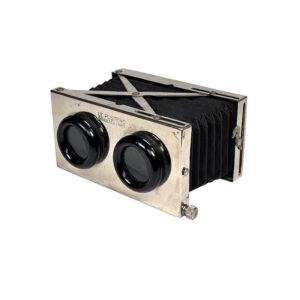
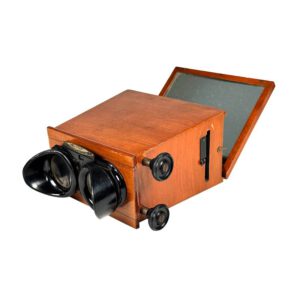
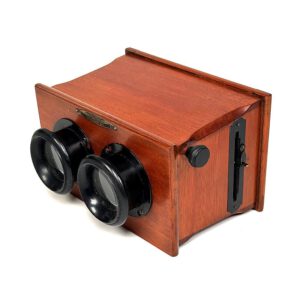
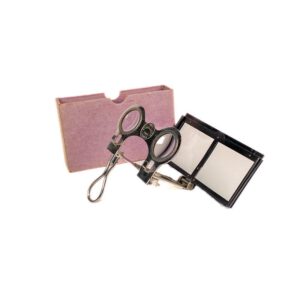
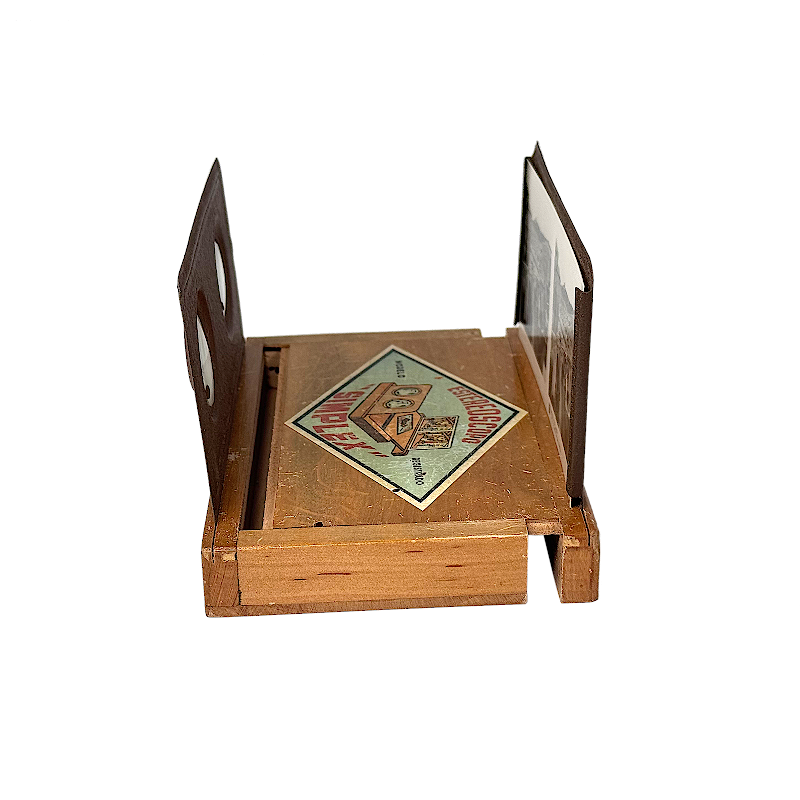
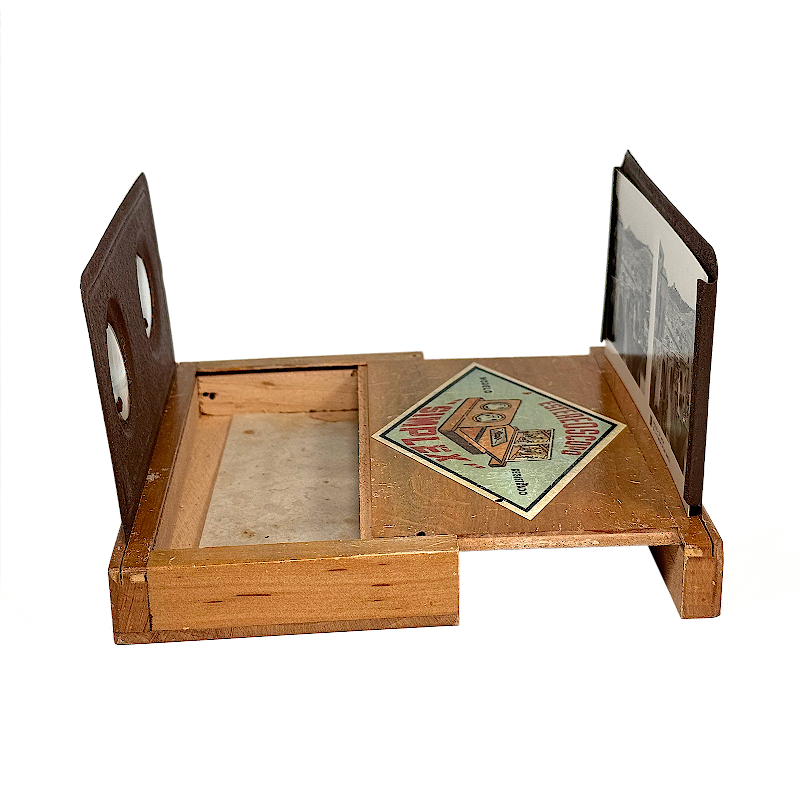
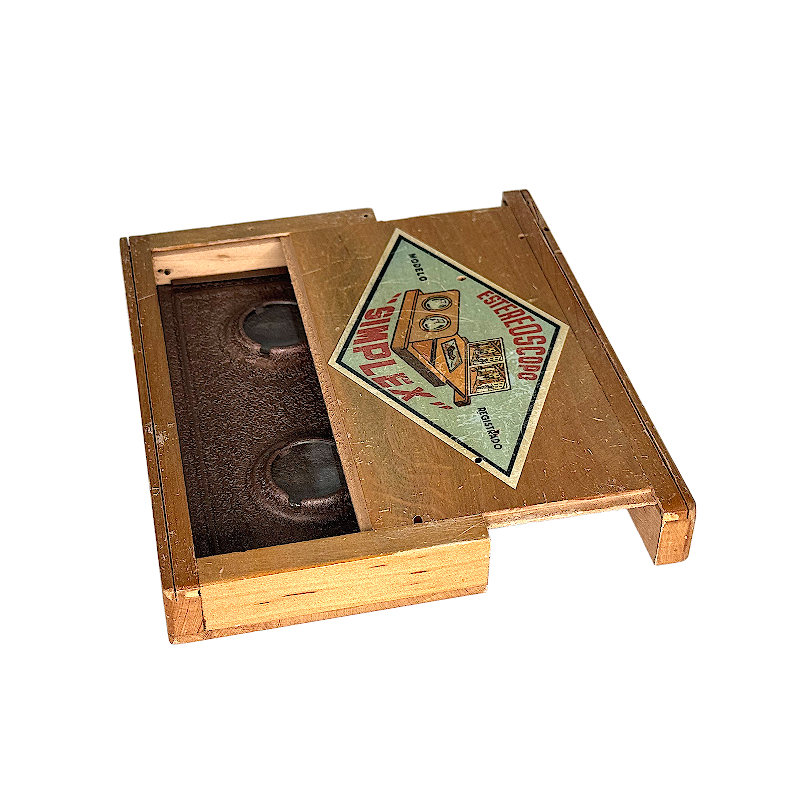
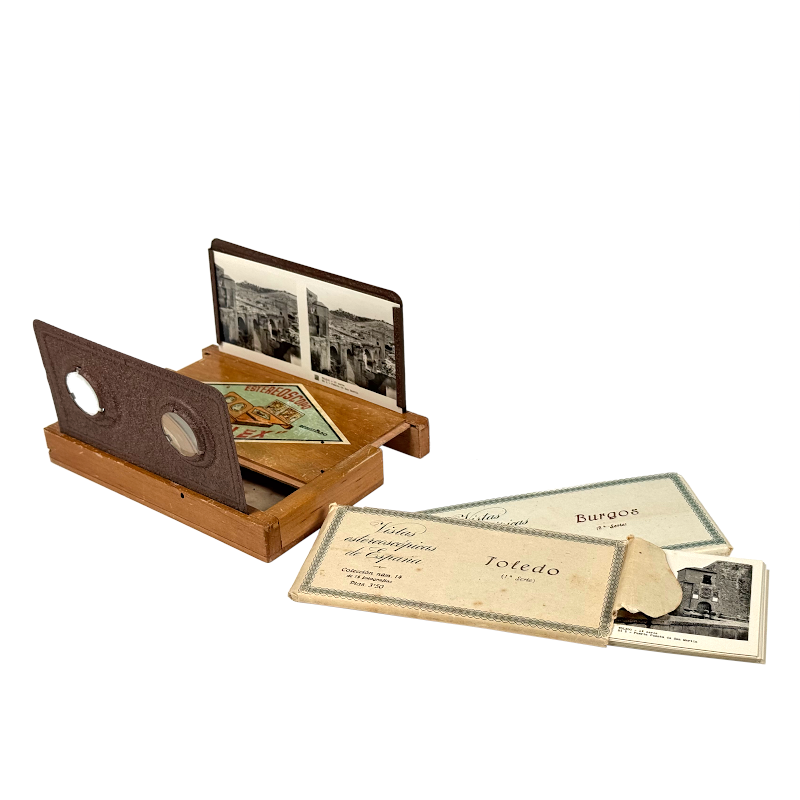
The Simplex is a compact, collapsible wooden stereoscope designed for viewing stereoscopic photographs on paper cards.
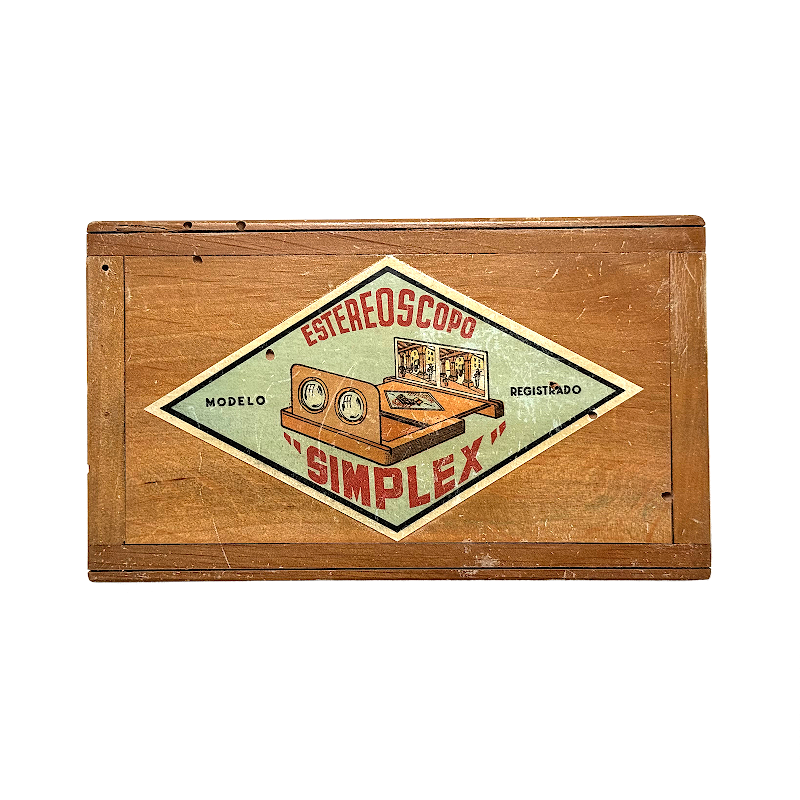
The instrument can be disassembled and stored in its shallow wooden case. When assembled, metal supports hold the viewing components in position. The card holder can be moved backwards and forwards to adjust the focus. A colourful label on the wooden cover illustrates the assembled stereoscope and bears the inscription Estereoscopo “Simplex” Modelo Registrado.
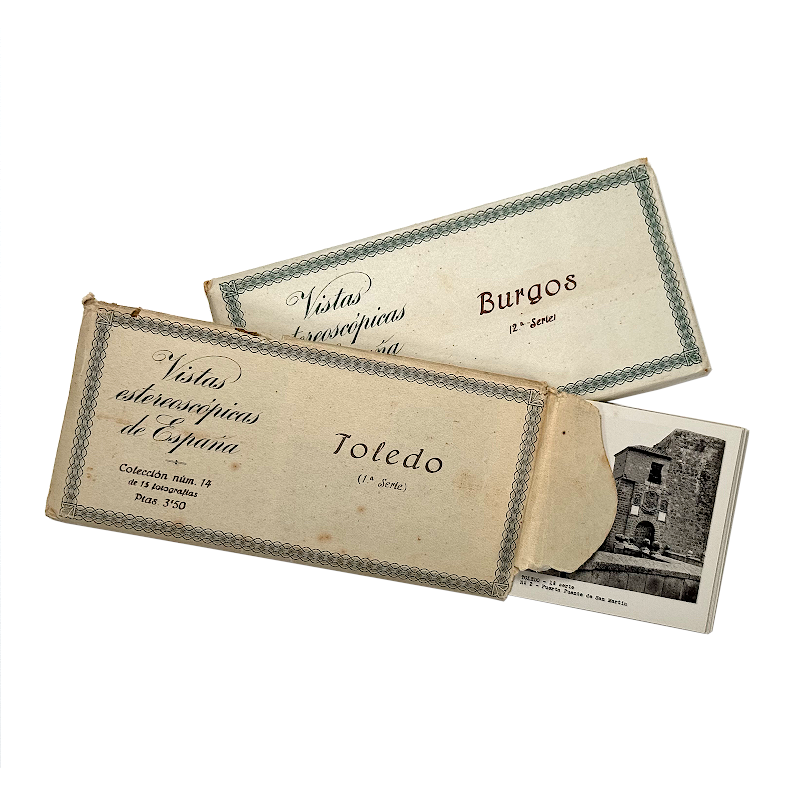
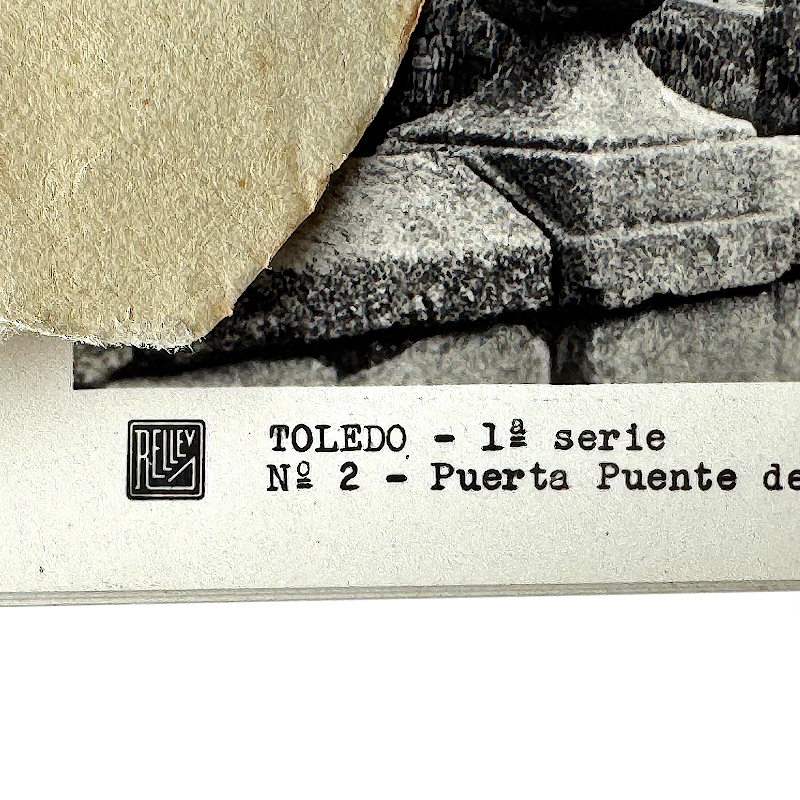
This example is accompanied by two collections of Spanish stereoviews depicting Toledo and Burgos, published under the Rellev trademark.
Historical Context
The Simplex was produced in Spain, probably during the 1930s or early 1940s. Its manufacturer has not yet been identified, although there are indications that it may have been associated with José Codina Torrás, a photographer and publisher based in Barcelona.
Codina began producing commercial stereoscopic photographs in 1929, initially documenting the Barcelona International Exposition and the Ibero-American Exposition in Seville. Around 1932, he introduced Estereoscopia Rellev, a series of stereoscopic photographs depicting Spanish cities, monuments and landscapes. In 1936, the publication was renamed Vistas estereoscópicas de España. The photographs were sold in numbered collections of fifteen views, enclosed in decorated paper envelopes.
Codina was also involved in the development and distribution of stereoscopes. In 1930 and 1932, he registered two utility models for folding stereoscopes (Un estereoscopio plegable). However, neither of the patent drawings corresponds to the construction of the Simplex. Nevertheless, Codina’s involvement in stereoscope design and the presence of two accompanying Rellev collections suggest that the Simplex may also have been distributed by his company, although this connection remains unconfirmed.