Details
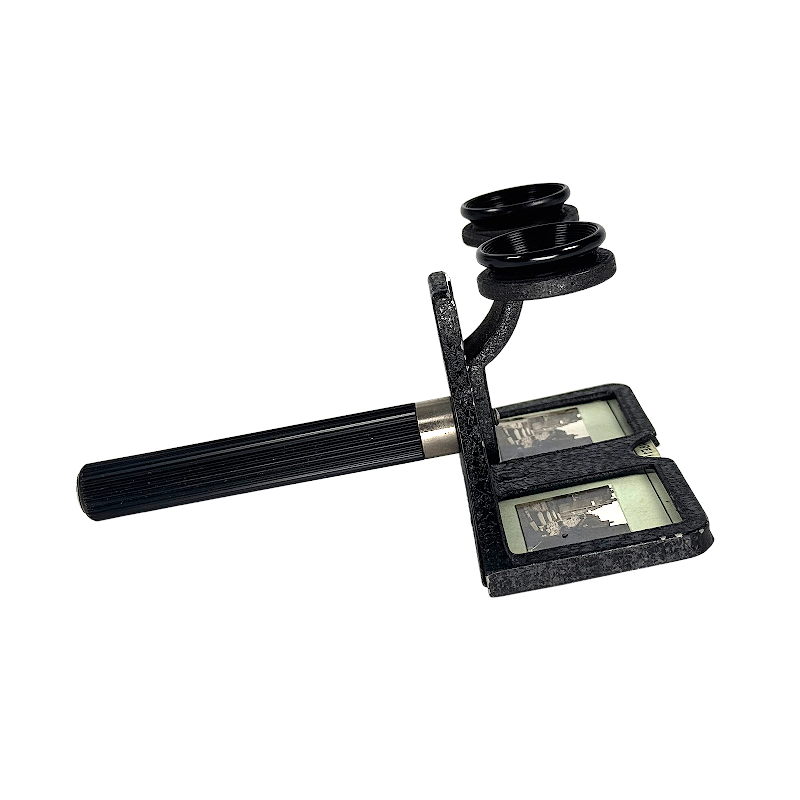
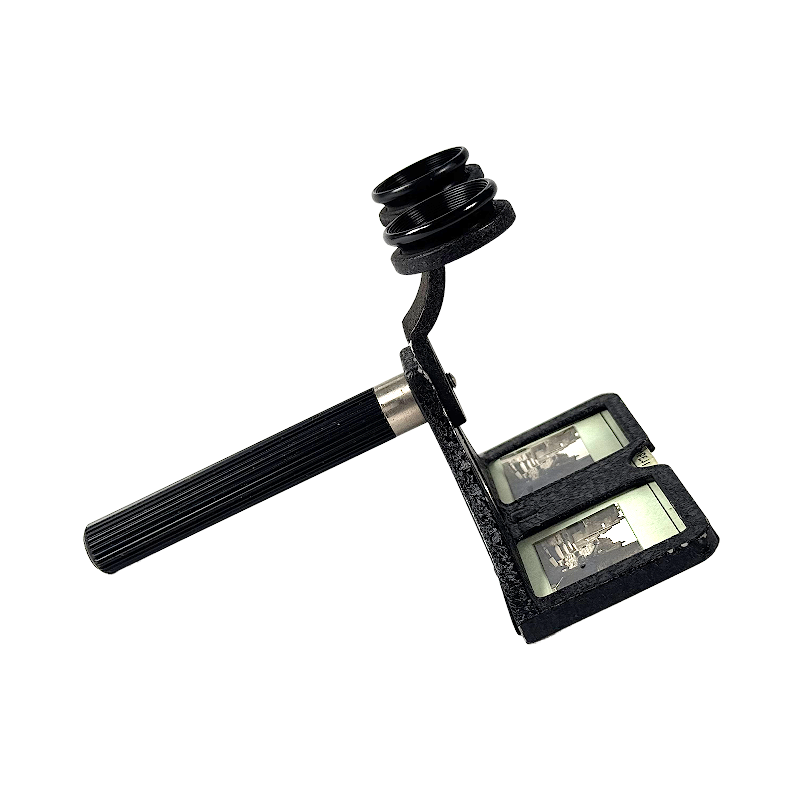
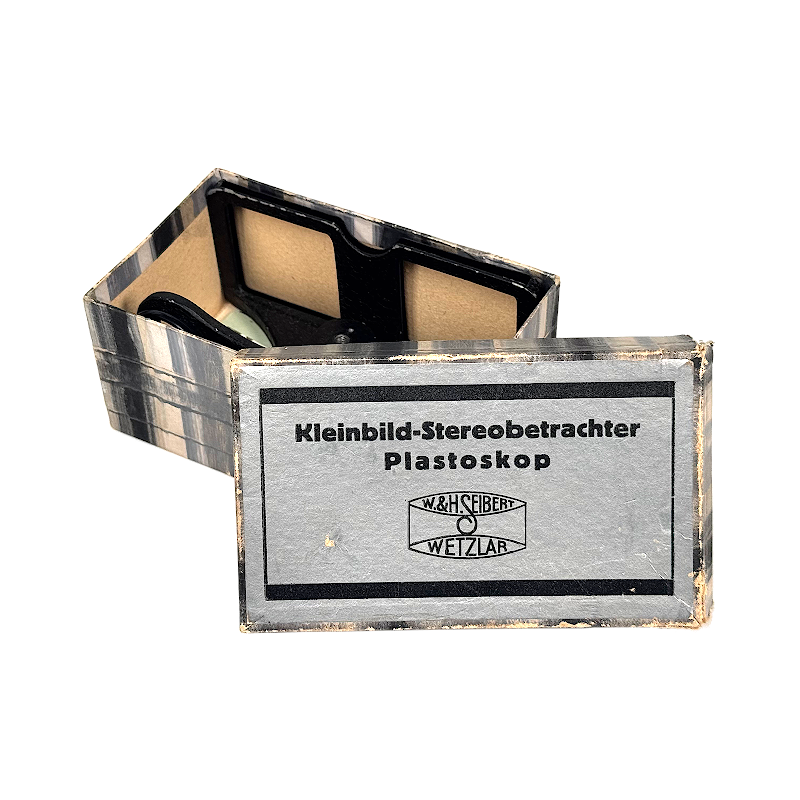
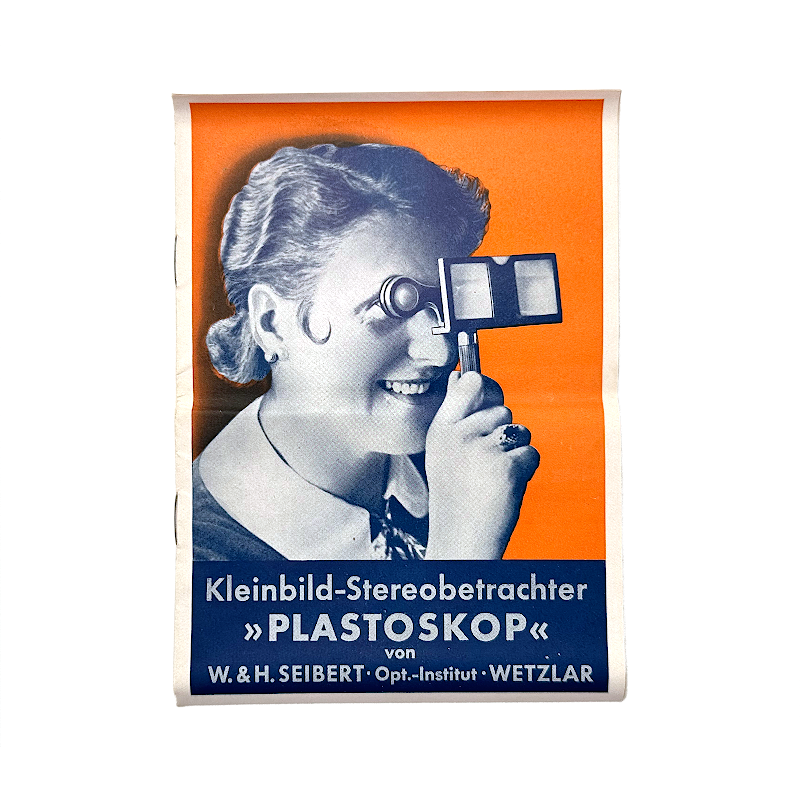
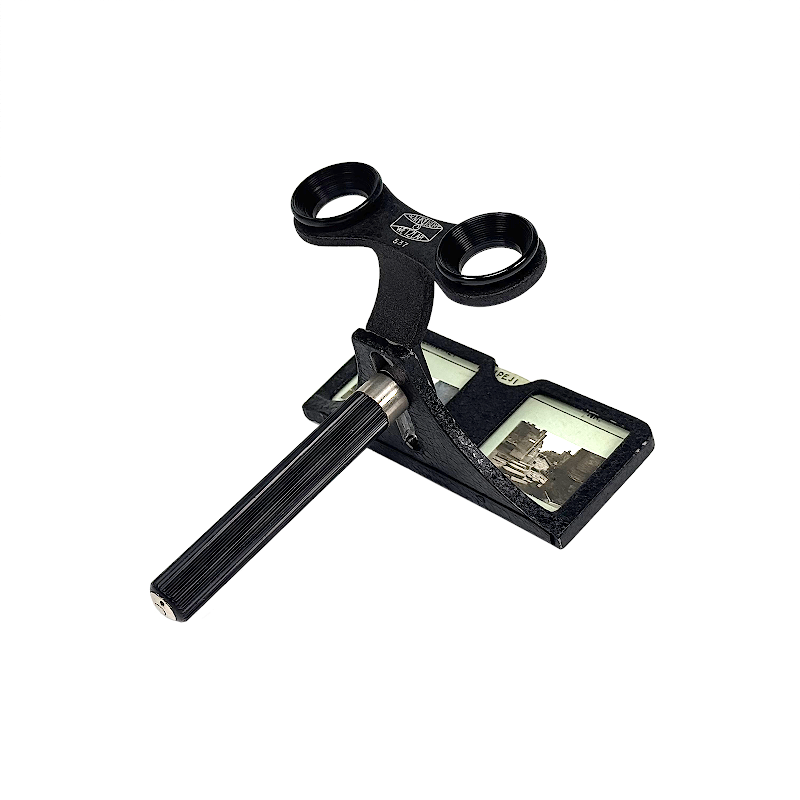
The Plastoskop is a compact German stereoscope designed for viewing small-format photographic stereo pairs. Its unusual construction consists of a binocular eyepiece assembly connected to a flat holder for the two images, together with a detachable, ribbed handle. Emil Busch’s Stereo-Dioskop features a similar design.
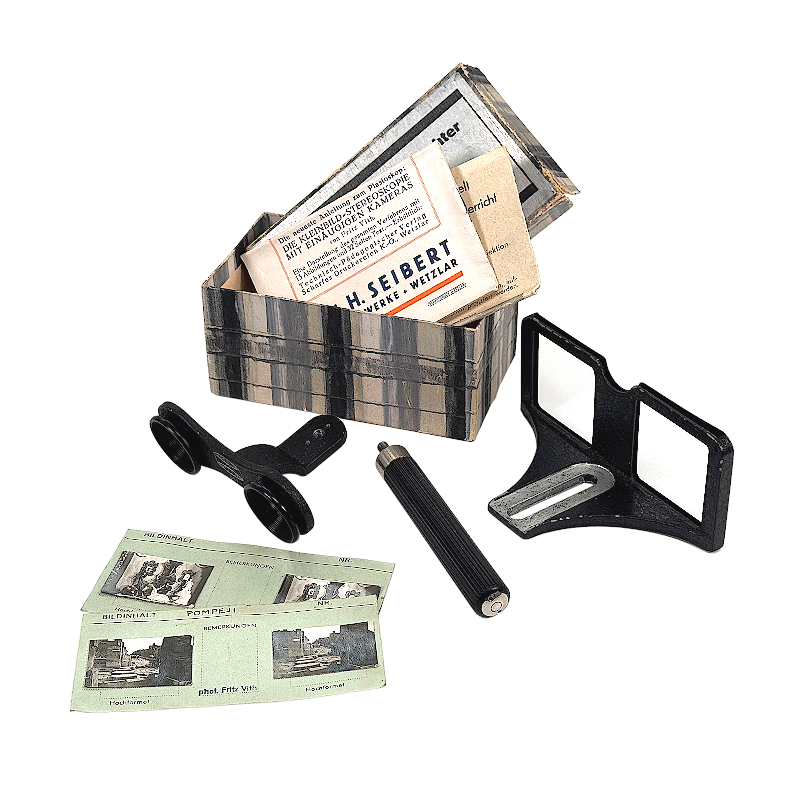
The two eyepieces are mounted on a curved support above the image holder, allowing the observer to view the small photographs stereoscopically. The instrument can be disassembled for storage in its compact cardboard box.
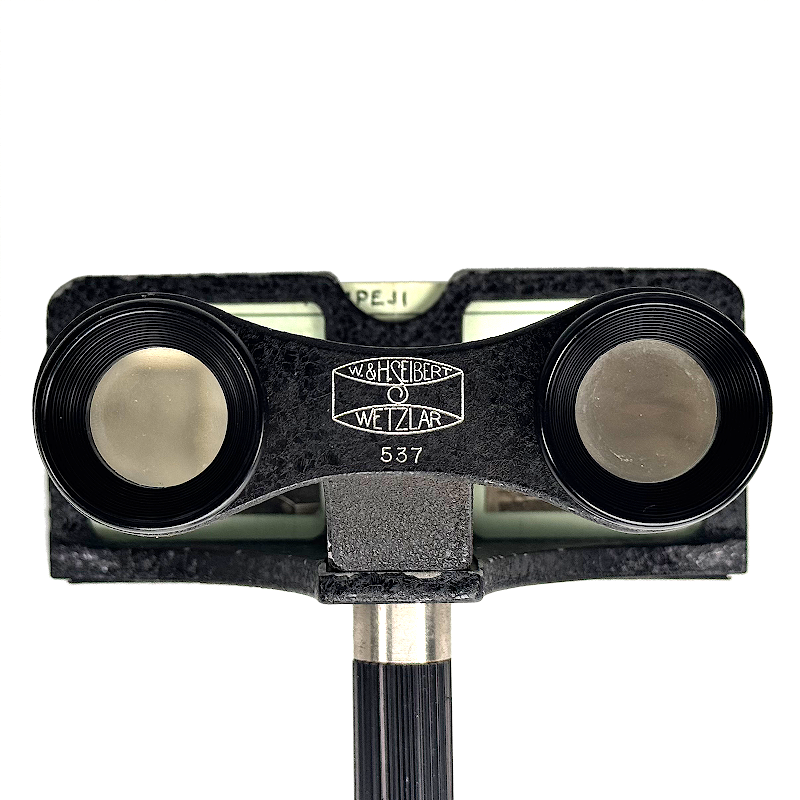
The eyepiece assembly bears the manufacturer’s characteristic W. & H. Seibert emblem, the city Wetzlar and the number 537.
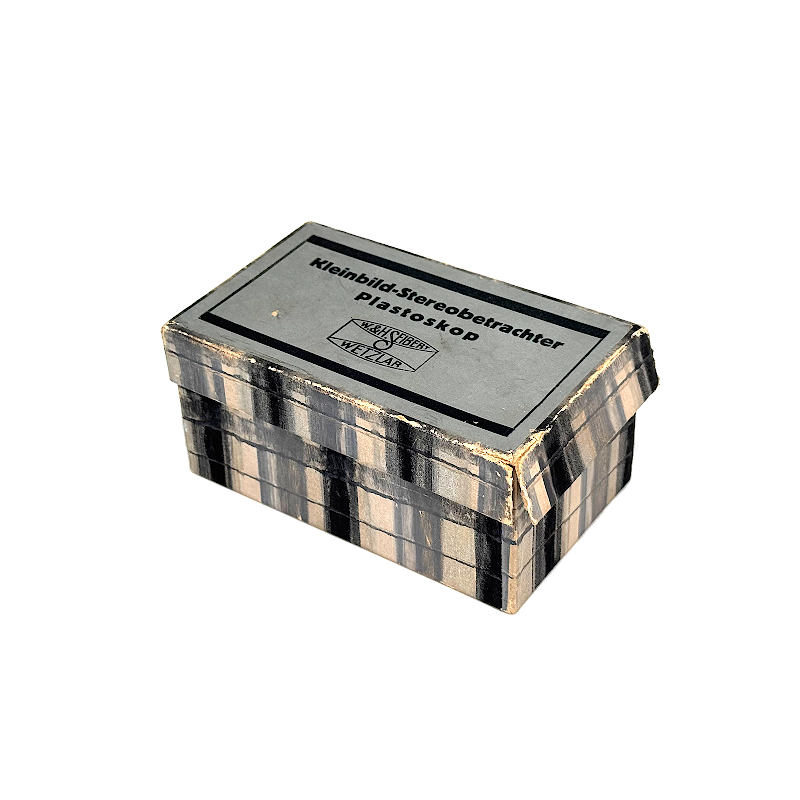
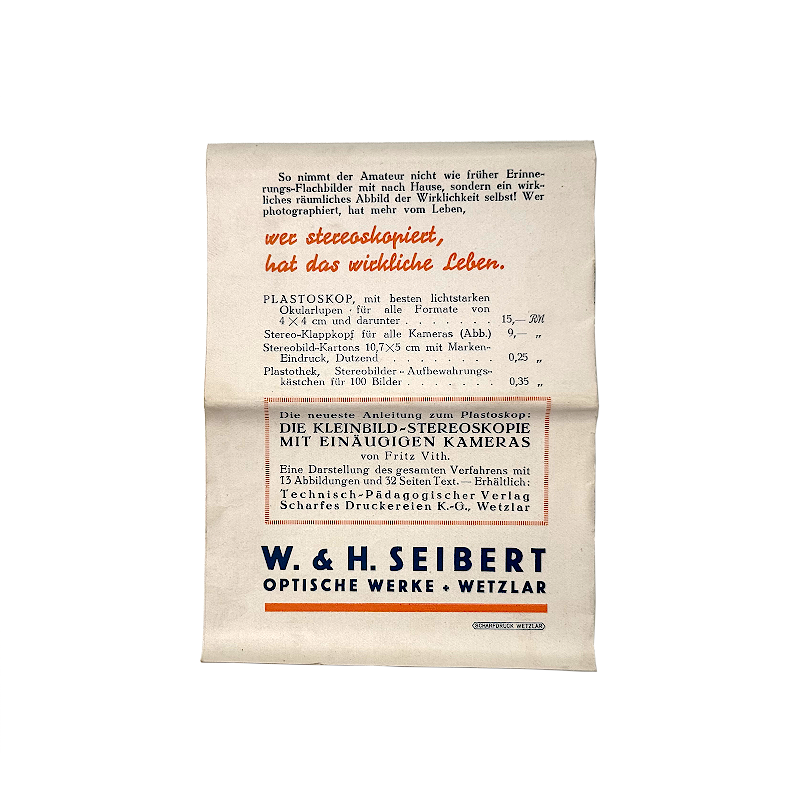
This example retains its original striped cardboard box, printed instructions, advertising material and sample stereoviews.
Historical Context
The Plastoskop was manufactured by W. & H. Seibert in Wetzlar, Germany, a company best known for its microscopes and other precision optical instruments. Founded by the brothers Wilhelm and Heinrich Seibert in the nineteenth century, the firm became part of Wetzlar’s important optical industry.
During the 1930s, the Plastoskop offered amateur photographers a relatively simple way to enjoy stereoscopic photographs without requiring a dedicated stereo camera. Two photographs taken successively from slightly different positions could be combined into a stereo pair.
In 1934, the photographer and author Fritz Vith published Die Kleinbild-Stereoskopie mit einäugigen Kameras (Small-Format Stereoscopy with Single-Lens Cameras), a practical guide to this technique that also promoted the Plastoskop. An advertisement for this book appears on the instruction sheet accompanying this Plastoskop.
The Plastoskop thus illustrates an approach to amateur stereophotography at a time when compact 35 mm cameras were becoming increasingly popular.