Details
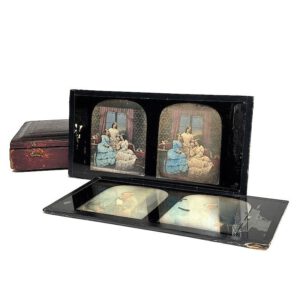
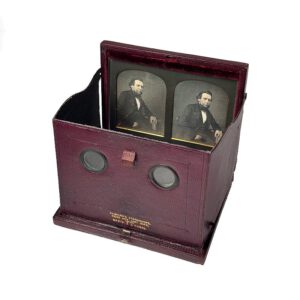
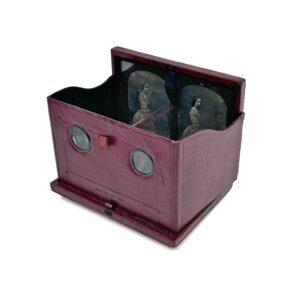
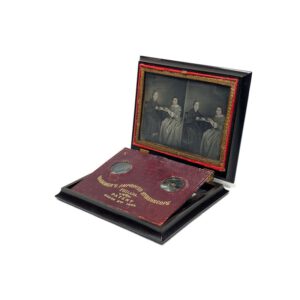
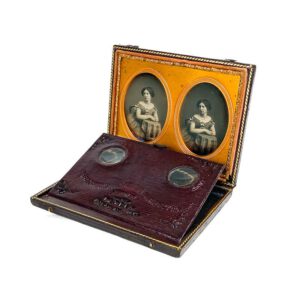
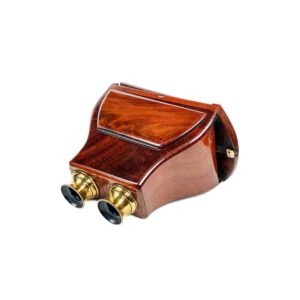
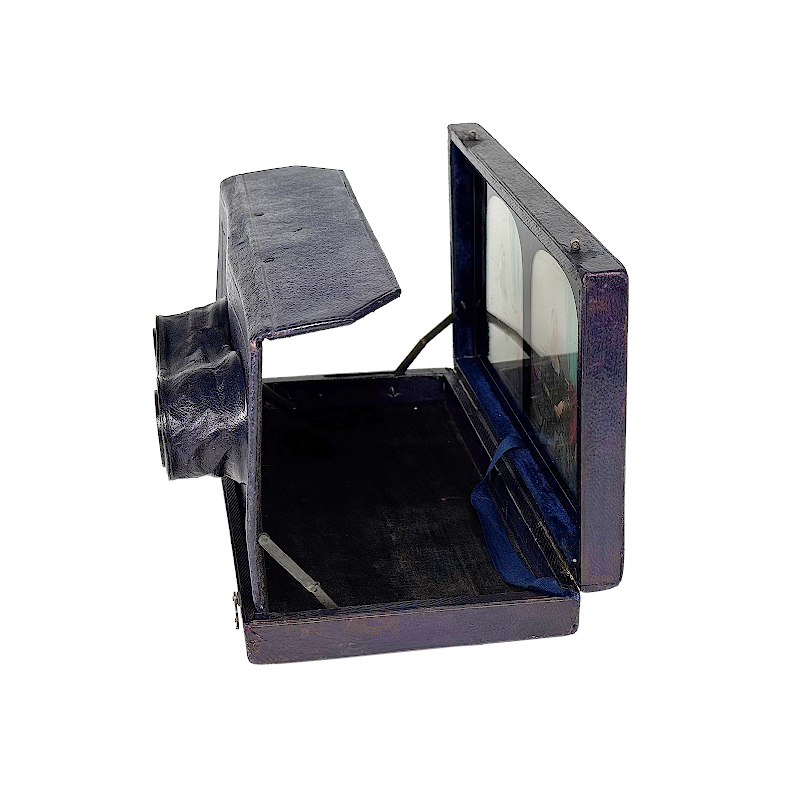
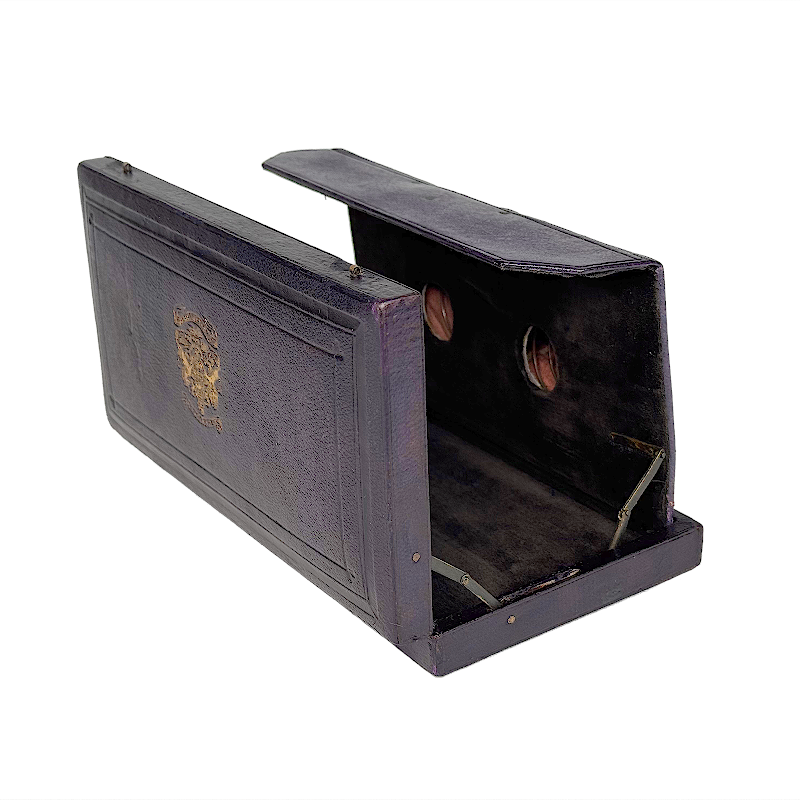
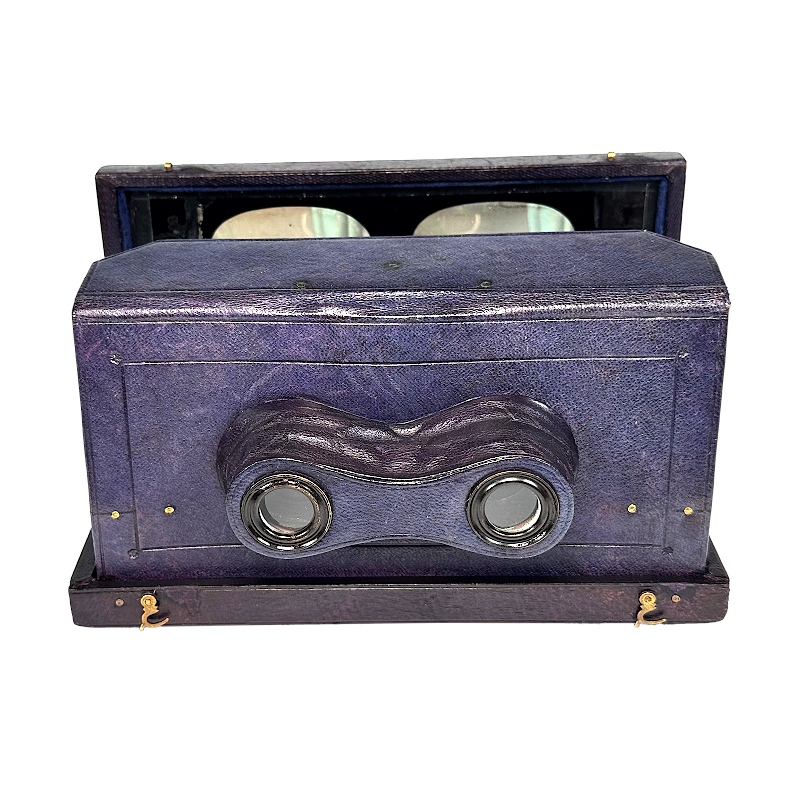
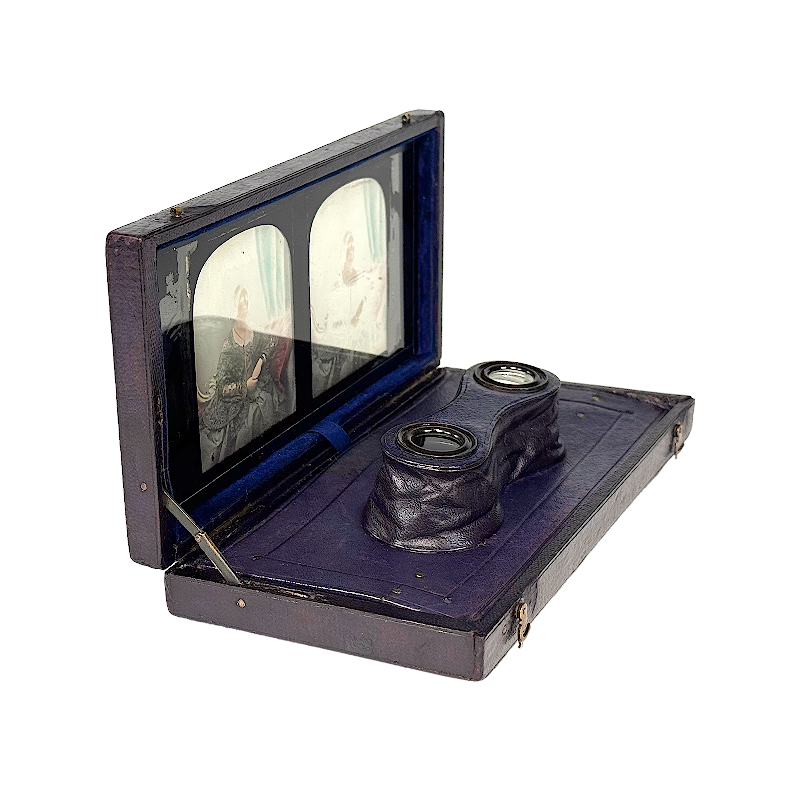
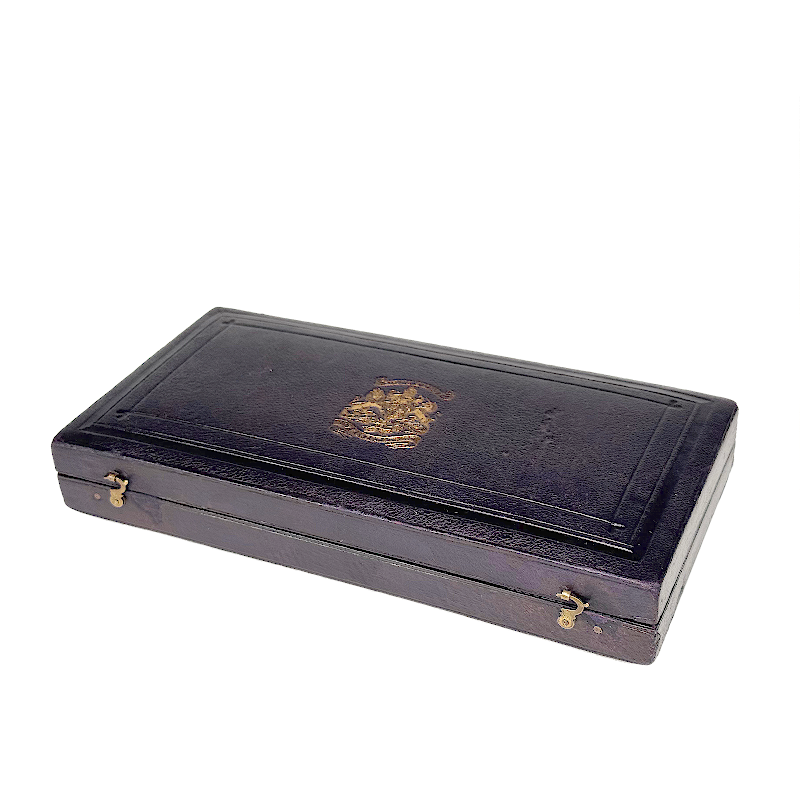
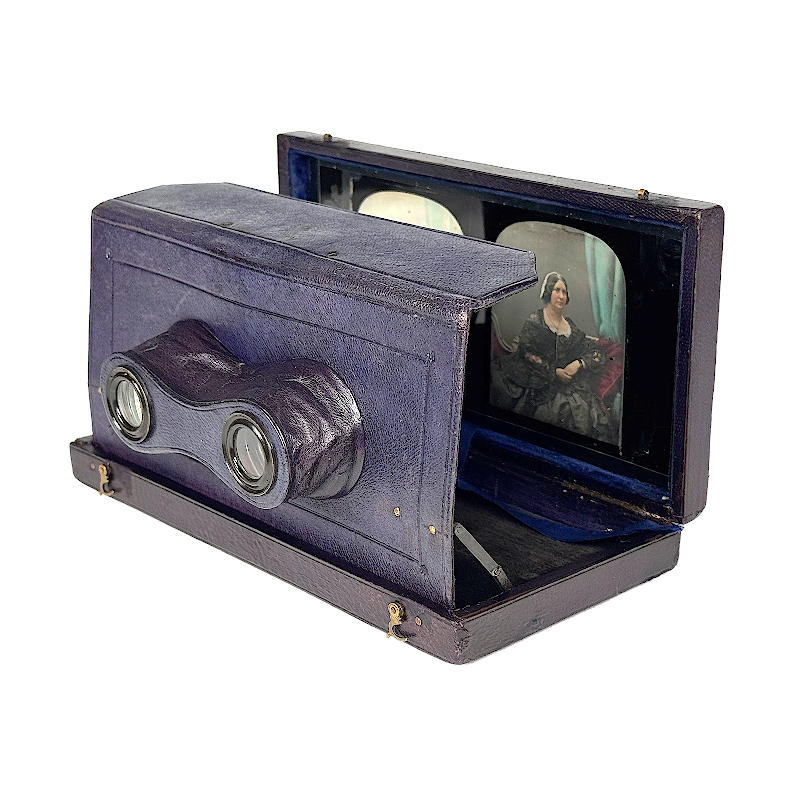
Antoine Claudet’s design was the first viewing case for stereo daguerreotypes. He patented his design in 1853. The patent included multiple case designs, not all of which were likely realised. The common case is a foldable viewer that is made of leather. Unlike comparable cases, the eyepieces with lenses protrude from the front panel.
The viewing case was primarily intended for customers whom Claudet had portrayed. It allowed them to view their portrait, and when folded, the daguerreotype was protected. The daguerreotypes within the case were interchangeable and could be released from the frame by means of a cord.
Historical Context
Antoine Claudet was a daguerreotypist and inventor who played a significant role in the popularisation of stereoscopy. He learned the daguerreotype process directly from Louis Daguerre and obtained a licence to practise the process in England. In 1851, he was introduced to the Brewster-type stereoscope, after which he began producing stereo daguerreotypes.
Claudet introduced improvements to the daguerreotype process that allowed shorter exposure times and made the technique suitable for portrait photography. His hand-coloured daguerreotype portraits, produced in a studio with decorated backgrounds, are regarded as being of high quality.
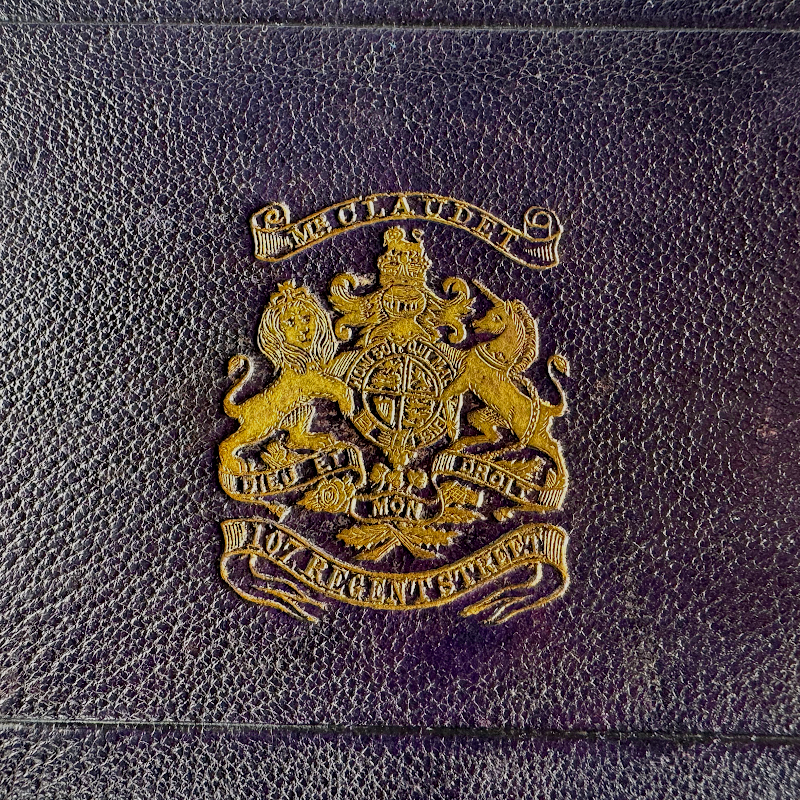
Short after his death, his studio, “Temple of Photography” at 107 Regent Street, was destroyed by fire, resulting in the loss of much of his photographic material.