Details
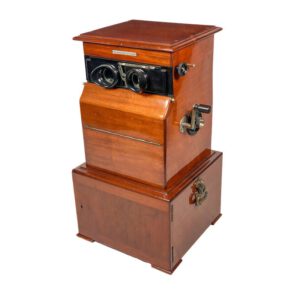
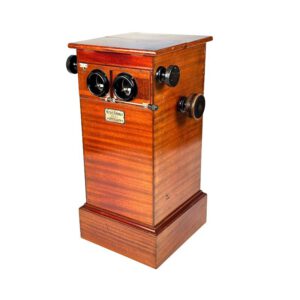
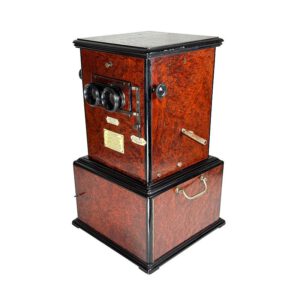
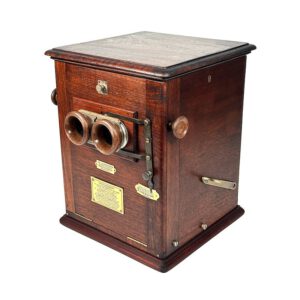
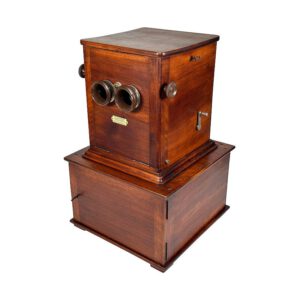
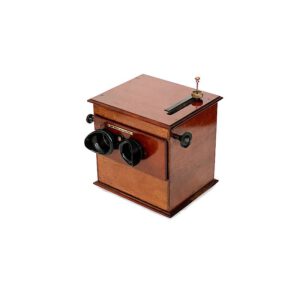
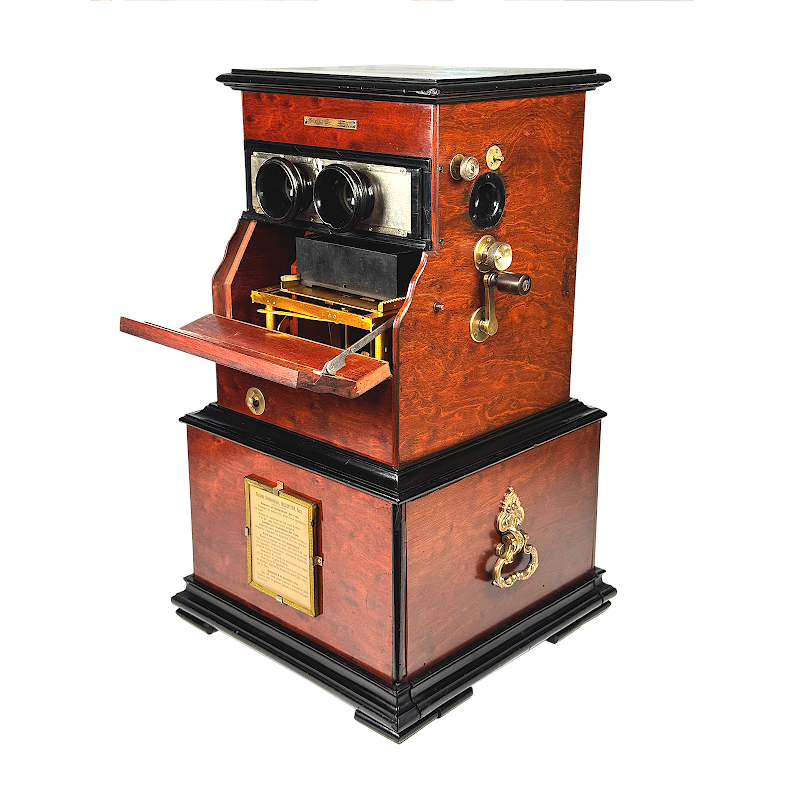
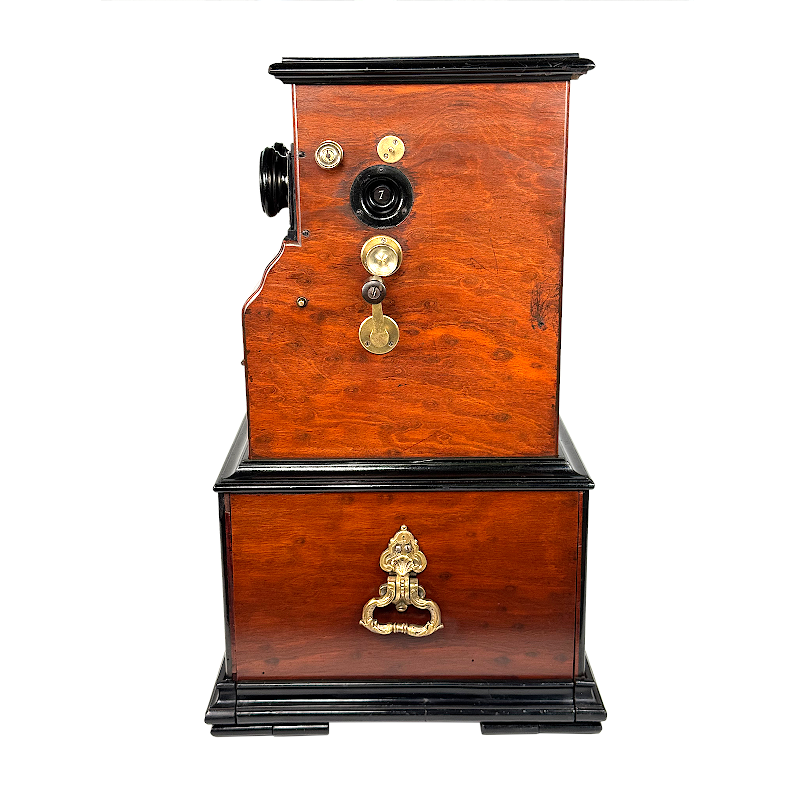
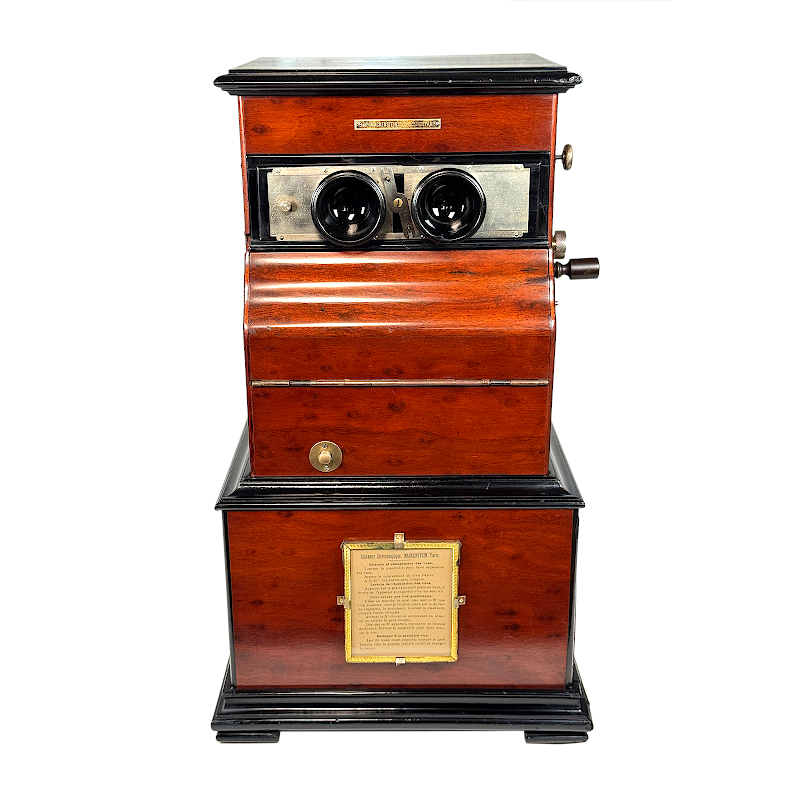
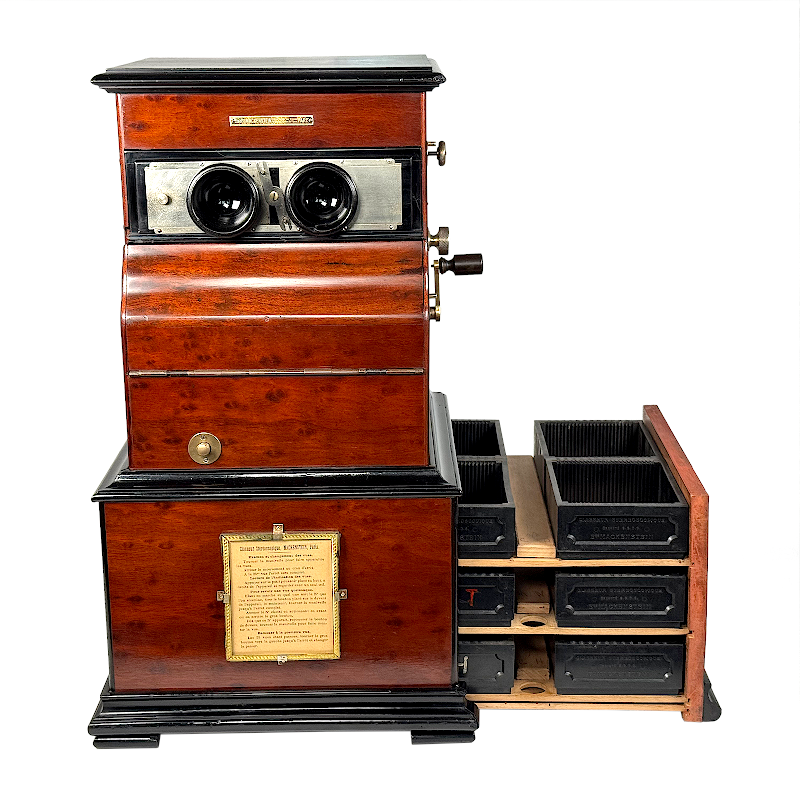
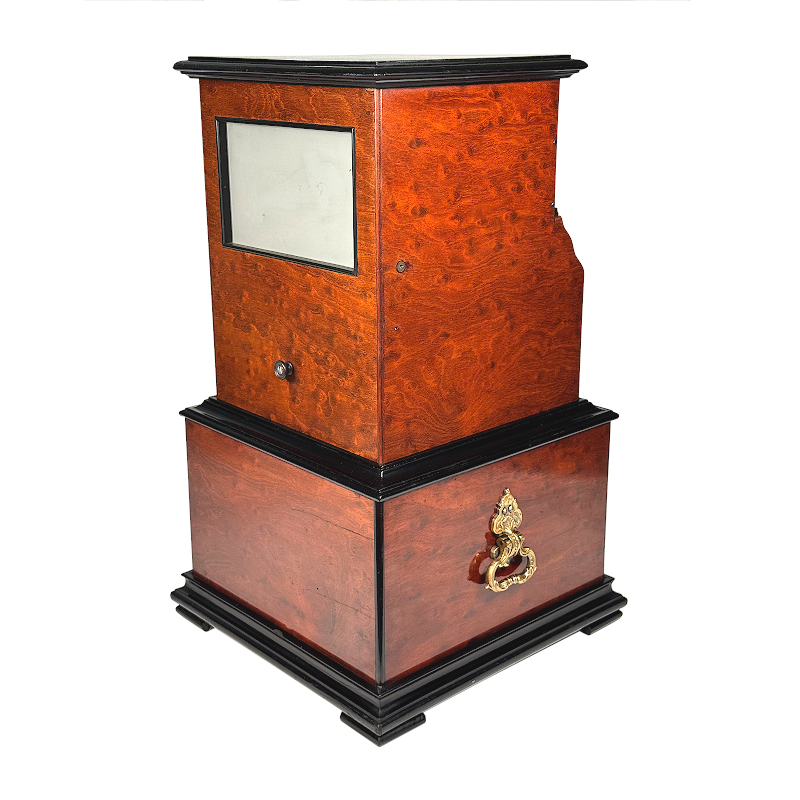
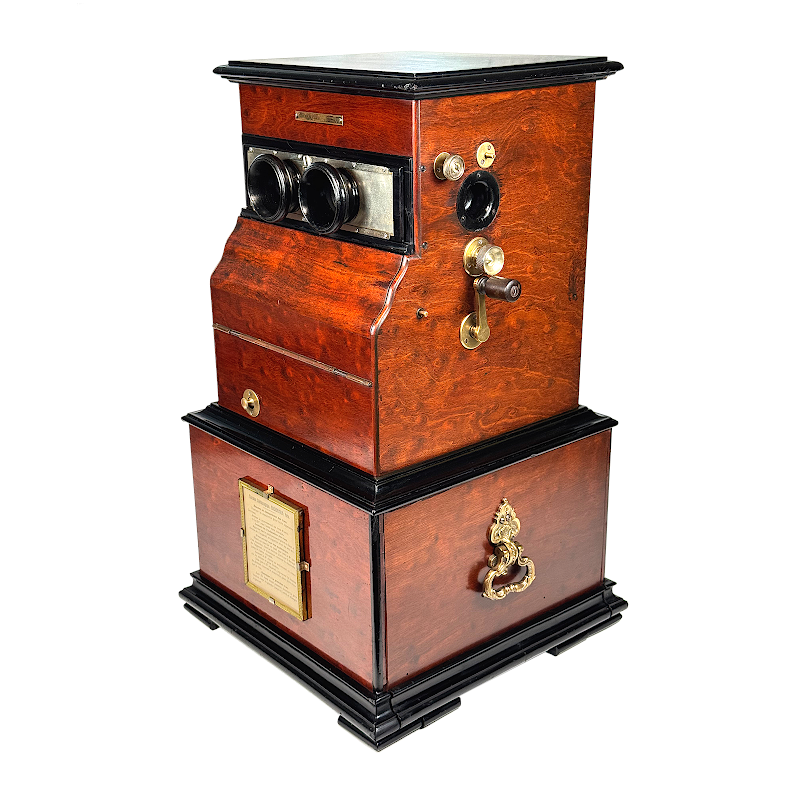
This unusually elaborate example of Mackenstein’s Nouveau Stéréoscope, introduced in 1911, was probably made during the early years of the model. The cabinet is finished in highly figured bird’s-eye maple veneer and differs in several details from the more standardized versions produced later. Among these is a spring mechanism that automatically pushes the front cover forward when released, facilitating access to the interchangeable trays.
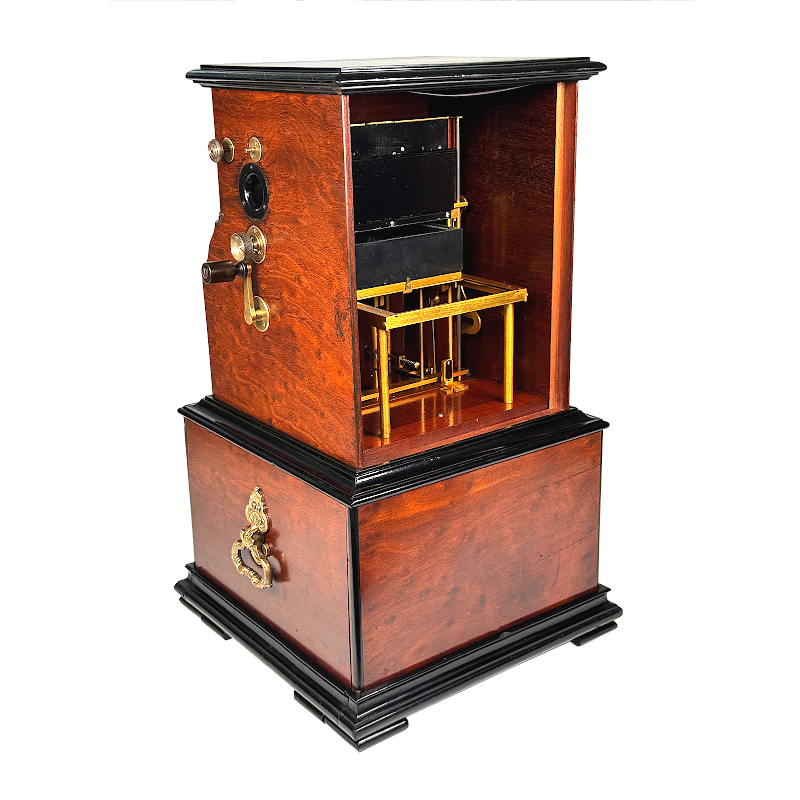
Each tray holds 25 glass stereoviews. Turning the side crank raises the selected slide from the tray into viewing position; continued rotation lowers it again and advances the tray to the next image. A separate control allows the tray to be moved rapidly forward or backward to select a particular view. Focus and interocular distance can be adjusted at the eyepieces.
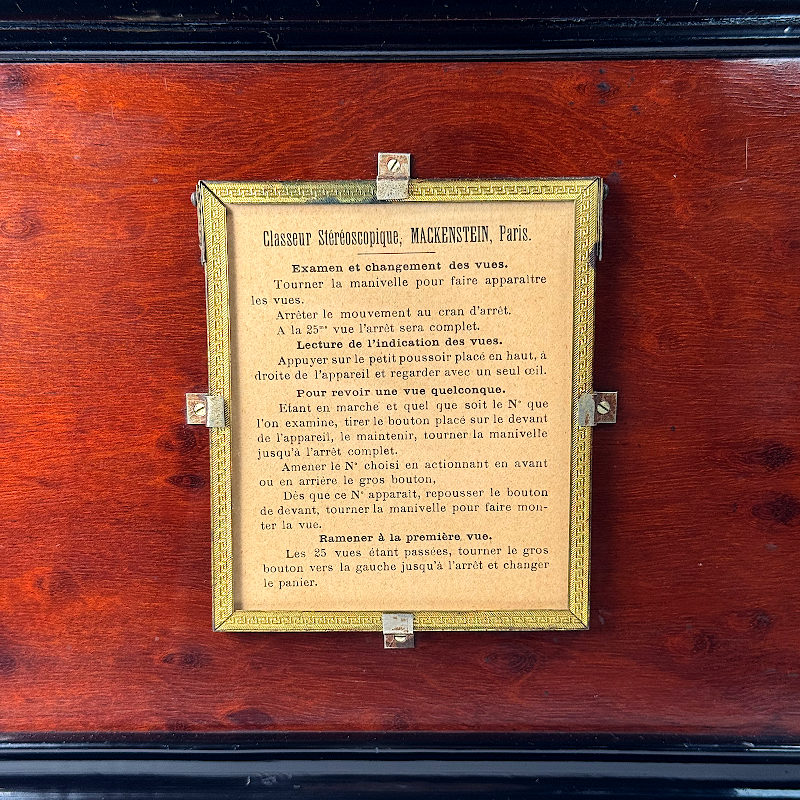
In advertisements, Mackenstein actively promoted direct contact with customers and repeatedly invited prospective buyers in his advertisements to visit his Paris premises and try his stereoscopic equipment before making a purchase. This particular stereoscope may originally have served as a demonstration model in Mackenstein’s Paris salesroom. An unusually prominent set of operating instructions is permanently mounted on the front of the lower cabinet, explaining how to advance the views, select a particular image and return to the first view. In addition, the brass mechanism inside the stereoscope is completely lacquered, protecting it against oxidation and wear. Together with the exceptionally luxurious finish in highly figured bird’s-eye maple veneer, these features suggest an apparatus intended for repeated demonstration rather than an ordinary domestic example.
Historical Context
Hermann Mackenstein was a German-born photographic manufacturer who established his business in Paris in 1872. Originally trained as a carpenter, he initially produced wooden components for photographic equipment before developing his own cameras. By the turn of the century, Mackenstein had become an established Parisian manufacturer of cameras, accessories and precision photographic equipment.
In 1902, the business was reorganized as Établissements Mackenstein. The First World War severely affected the company. Mackenstein’s property was sequestered in 1915 because of his German origins, and he was expelled from France the following year. He returned to Paris in 1922 and died in 1924. The business was subsequently continued by his former employees Henri Suffize and Léon Molitor.
Further reading: Stereoscopy History Series — Mackenstein (A. Ruiter)