Details
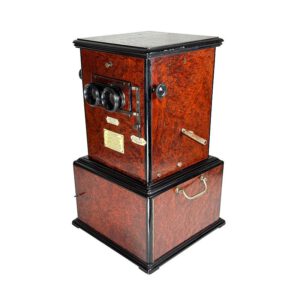
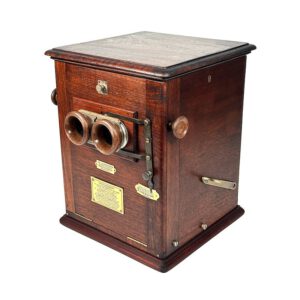
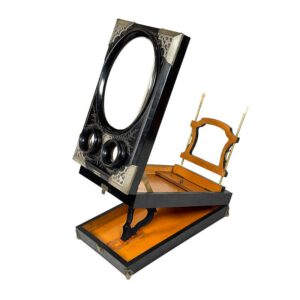
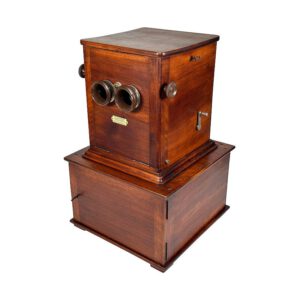
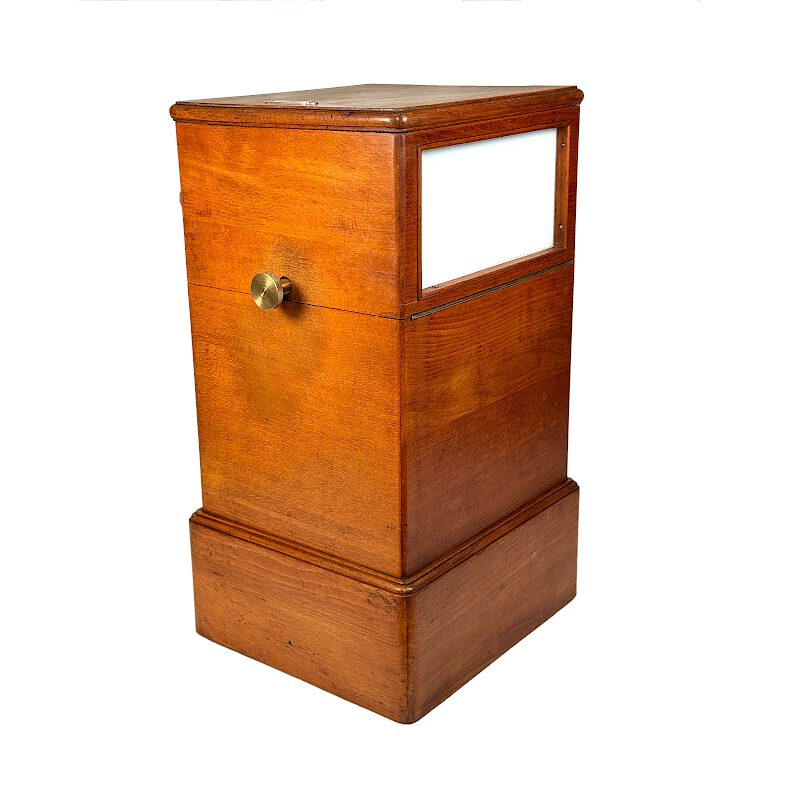
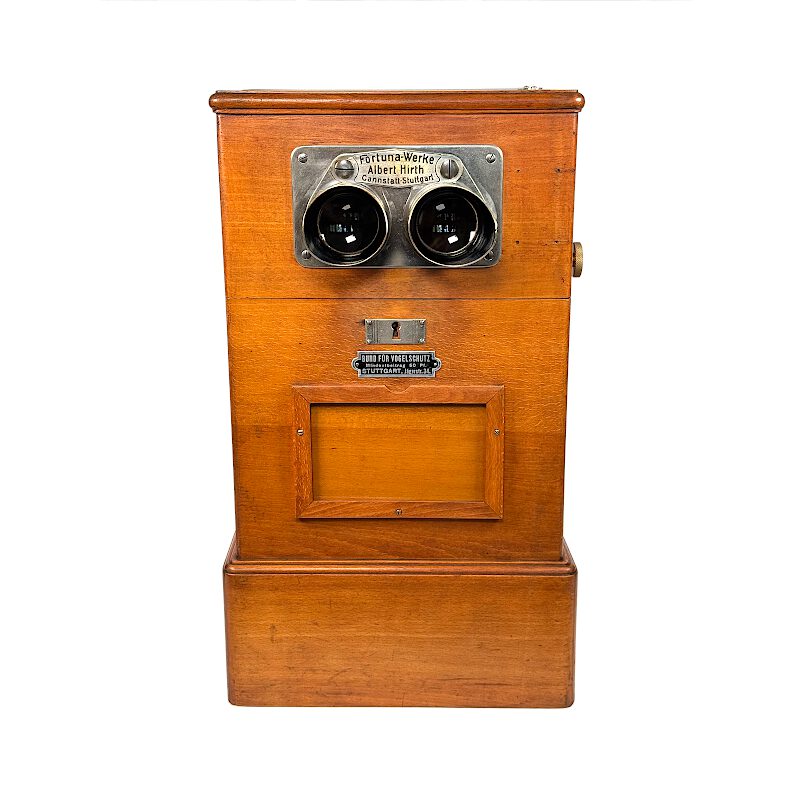
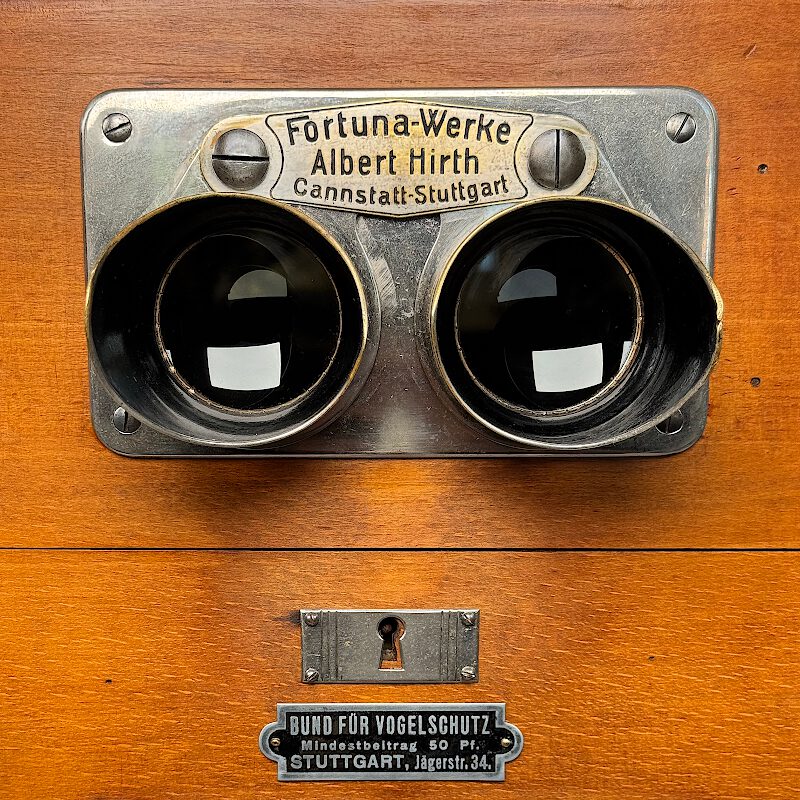
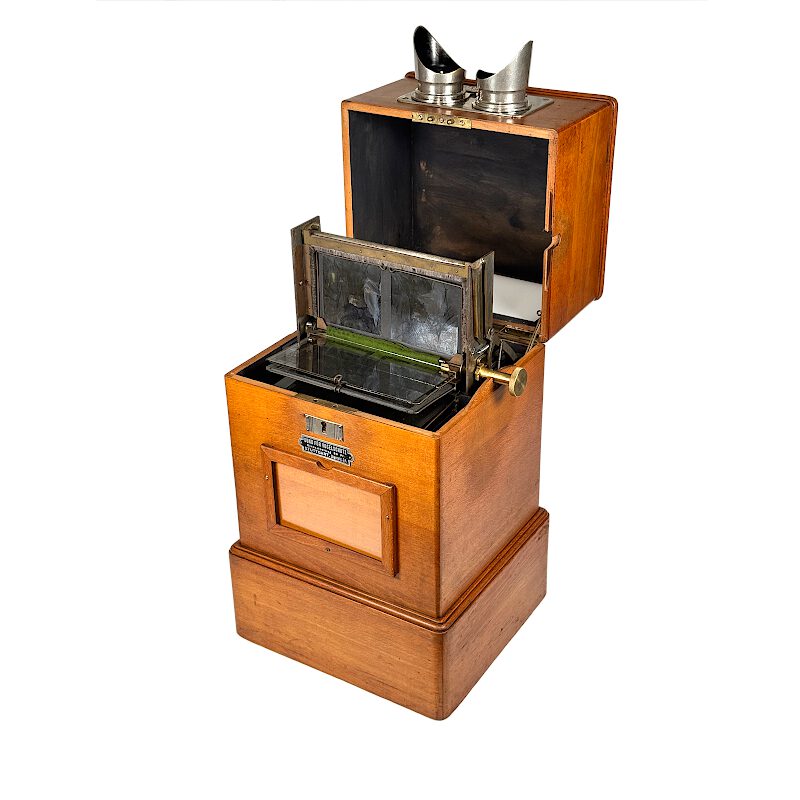
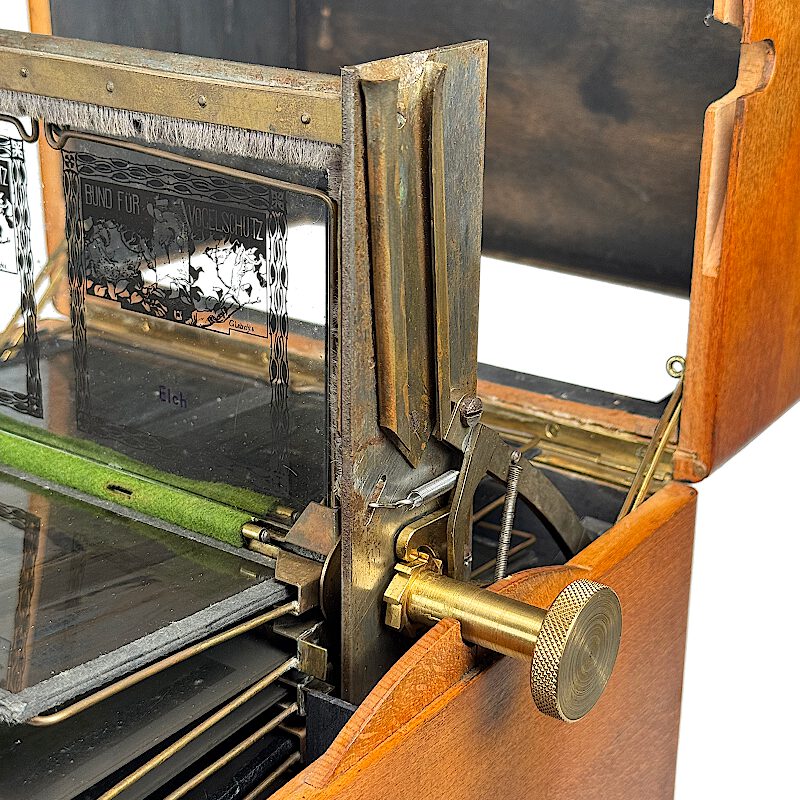
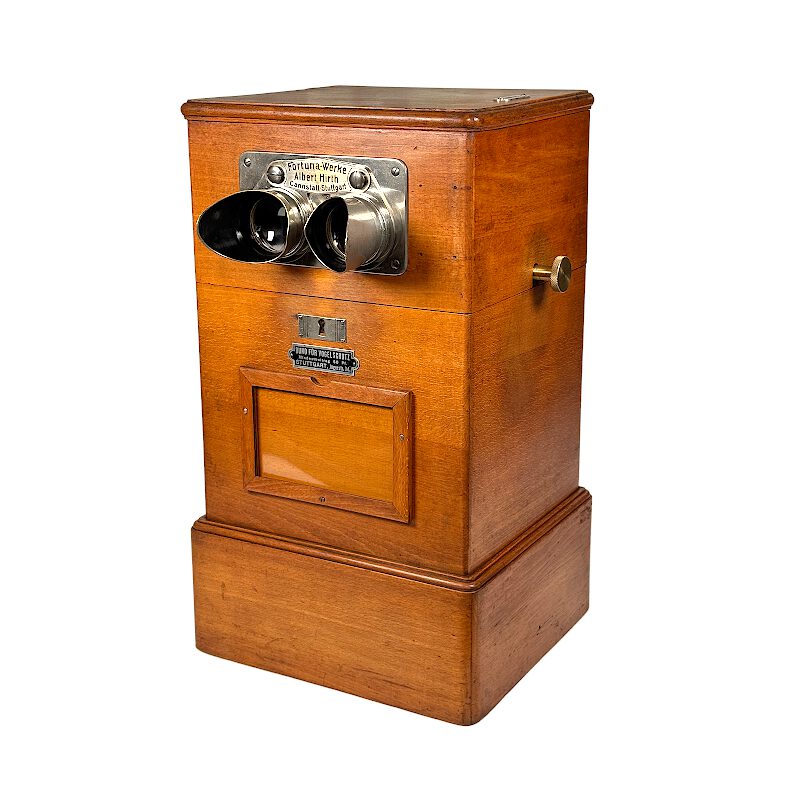
This tabletop stereoscope is housed in a solid beechwood cabinet and was manufactured by Fortuna-Werke Albert Hirth in Cannstatt-Stuttgart. The stereoscopic images are viewed through large eyepieces with adjustable interpupillary distance. A rotary handle on the right advances the internal mechanism and presents the images in sequence.
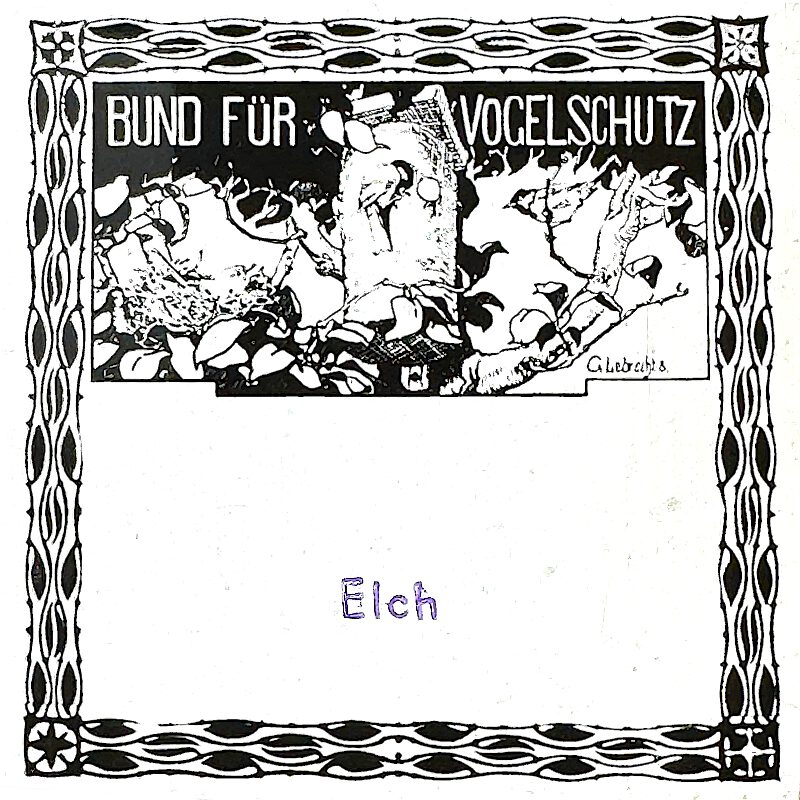
The stereoscope contains an original series of stereoscopic photographs produced for the Bund für Vogelschutz (Association for the Protection of Birds), depicting predominantly birds but also other animals such as elk. Each photograph is preceded by a glass title plate announcing the following subject. The cabinet was most likely designed for public or semi-public use and originally operated by means of a coin mechanism.
The combination of a coin-operated stereoscope with a dedicated wildlife series illustrates the use of stereoscopic photography not only for entertainment, but also for public education and the promotion of nature conservation.
The manufacturer’s designation, the association’s name, and the late Art Nouveau design of the title plates suggest a production date around 1910 or shortly before the First World War.
Historical Context
Fortuna-Werke Albert Hirth was founded in Cannstatt near Stuttgart in 1903 and specialized in precision engineering and mechanical equipment. The company later became particularly well known for its industrial machinery and continues to operate today as Fortuna GmbH.
The image series was produced for the Bund für Vogelschutz, founded in Stuttgart in 1899 by Lina Hähnle and the historical predecessor of today’s Naturschutzbund Deutschland (NABU, Nature and Biodiversity Conservation Union). Public education was an important part of the association’s activities, and visual media were used to raise awareness of wildlife and its protection.
The decorative title plates were designed by G. Lebrecht, an illustrator whose work is also known from contemporary picture postcards produced for the Bund für Vogelschutz.