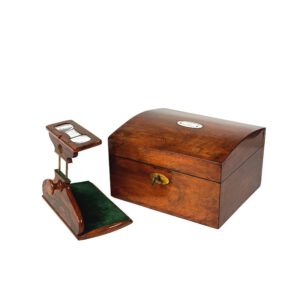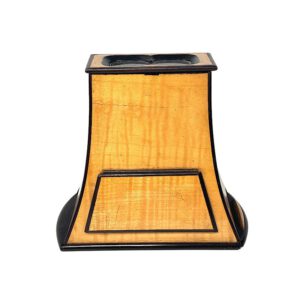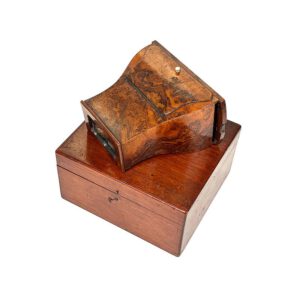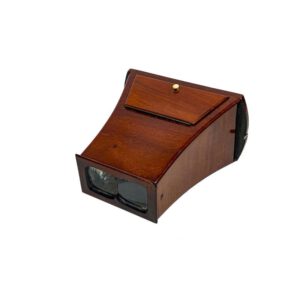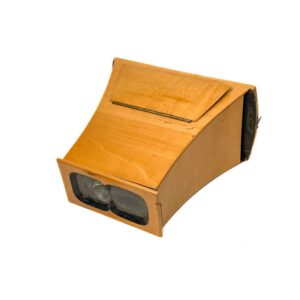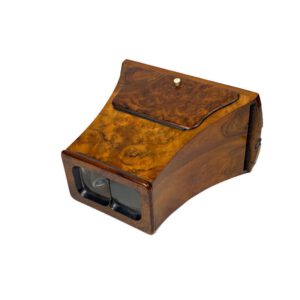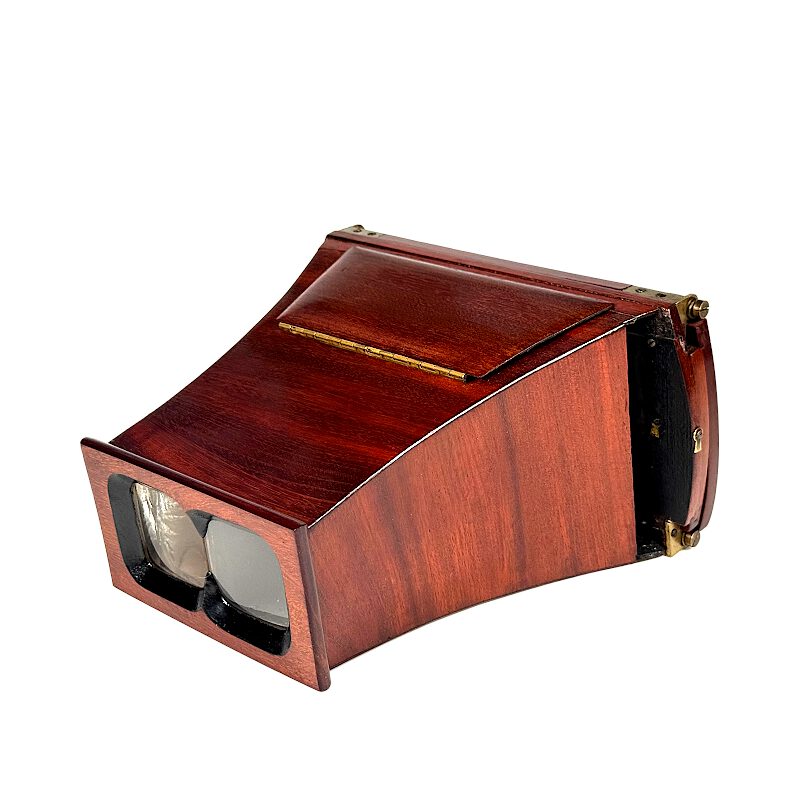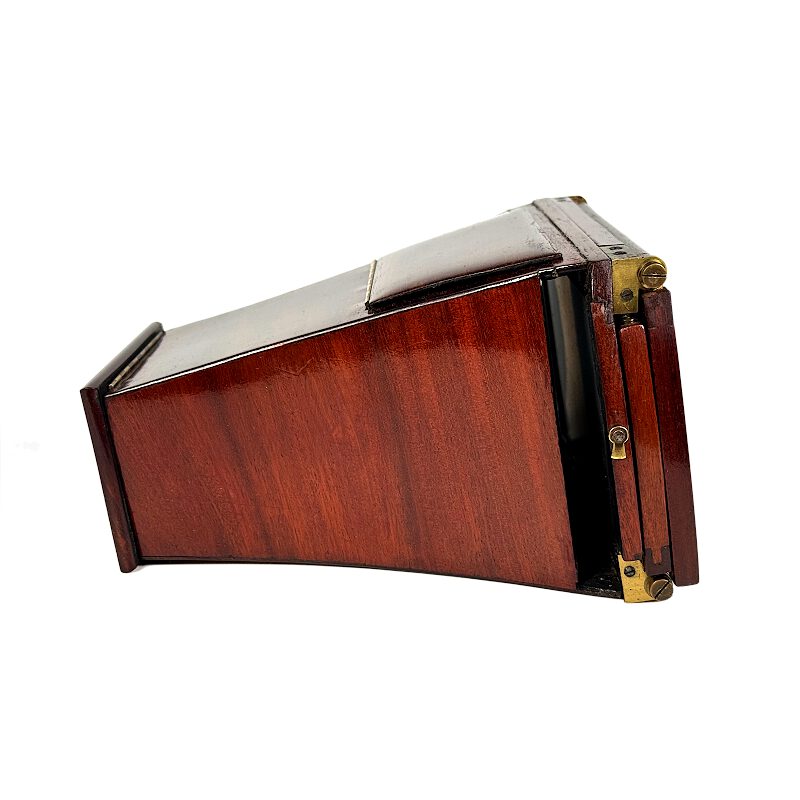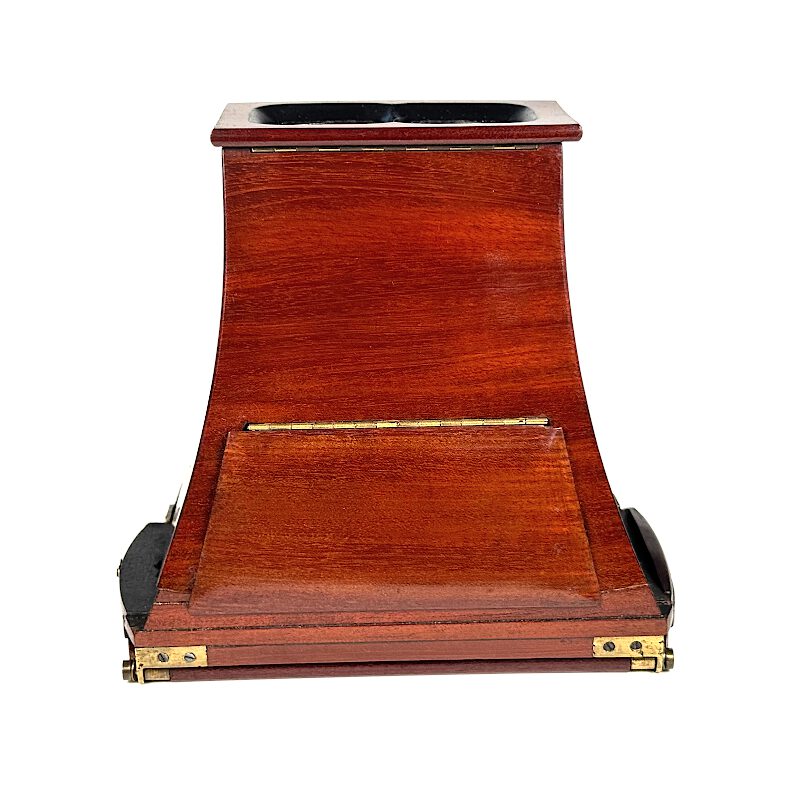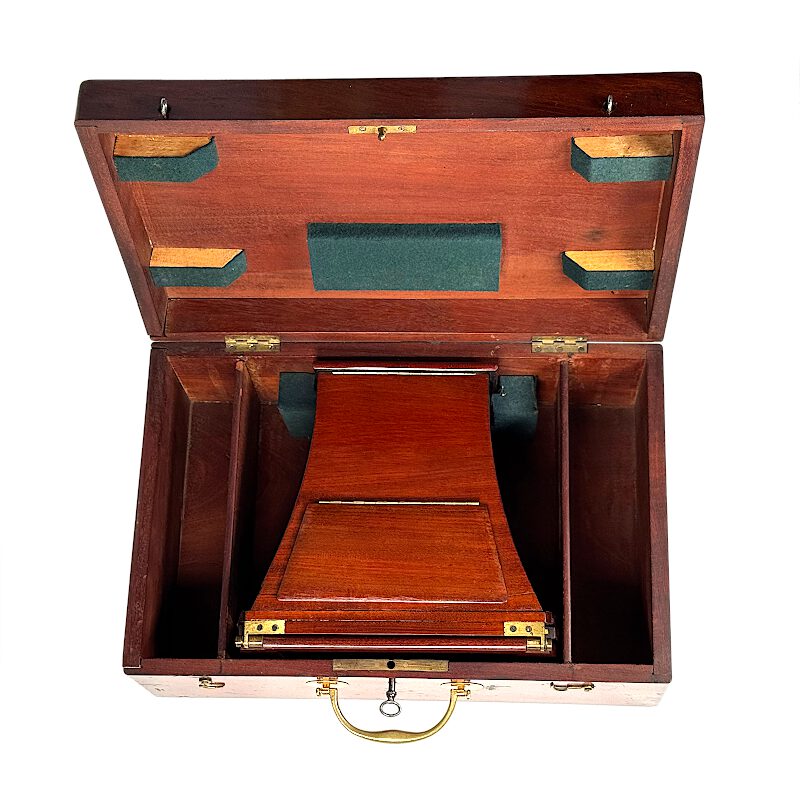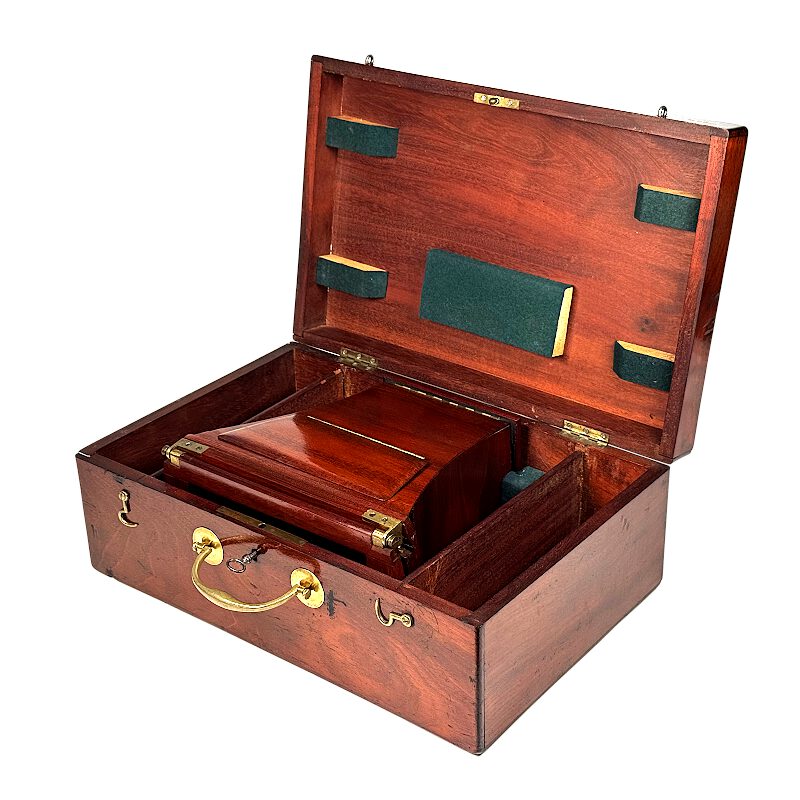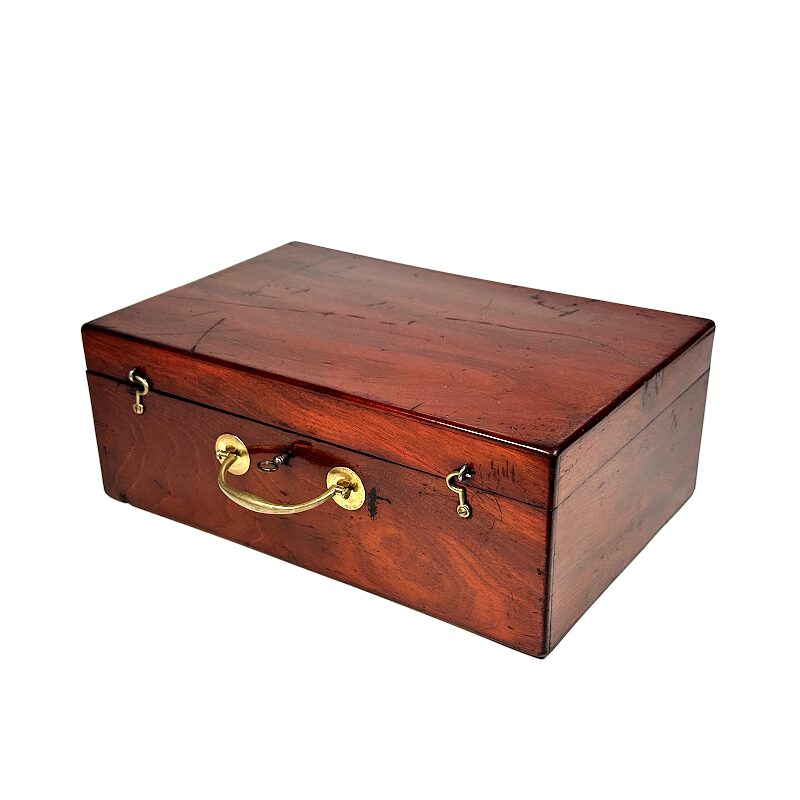
Brewster Stereoscope ‘Stéréoscope Polychromatique’, with Original Storage Box
Details
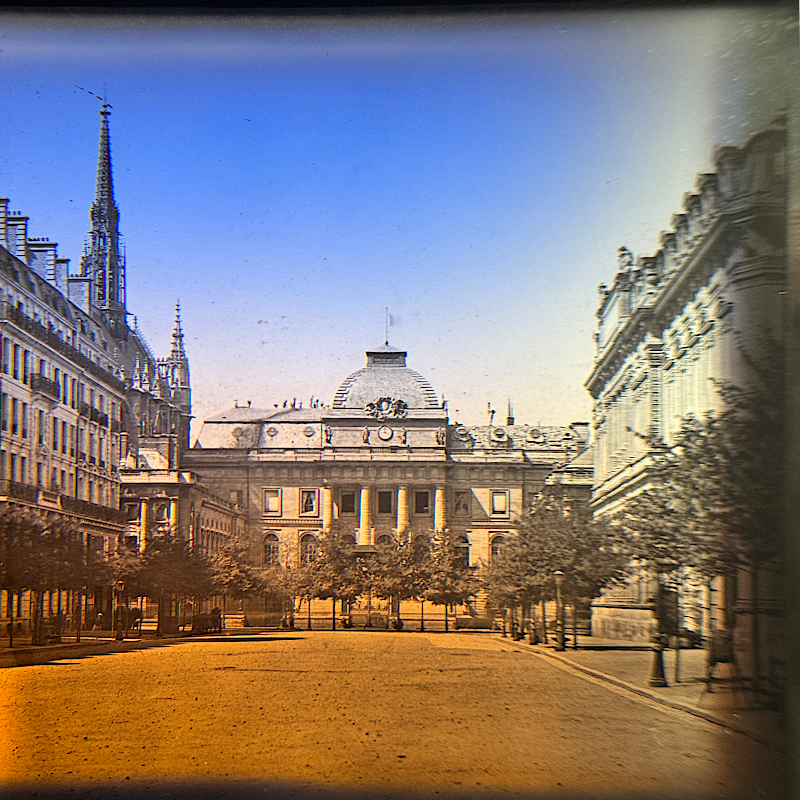
Very quickly, black-and-white photography ceased to be an end in itself. Dioramic views took a step towards colour by playing on the stereotype, but some inventors used the stereoscope as a theatre with illuminating effects on glass views.
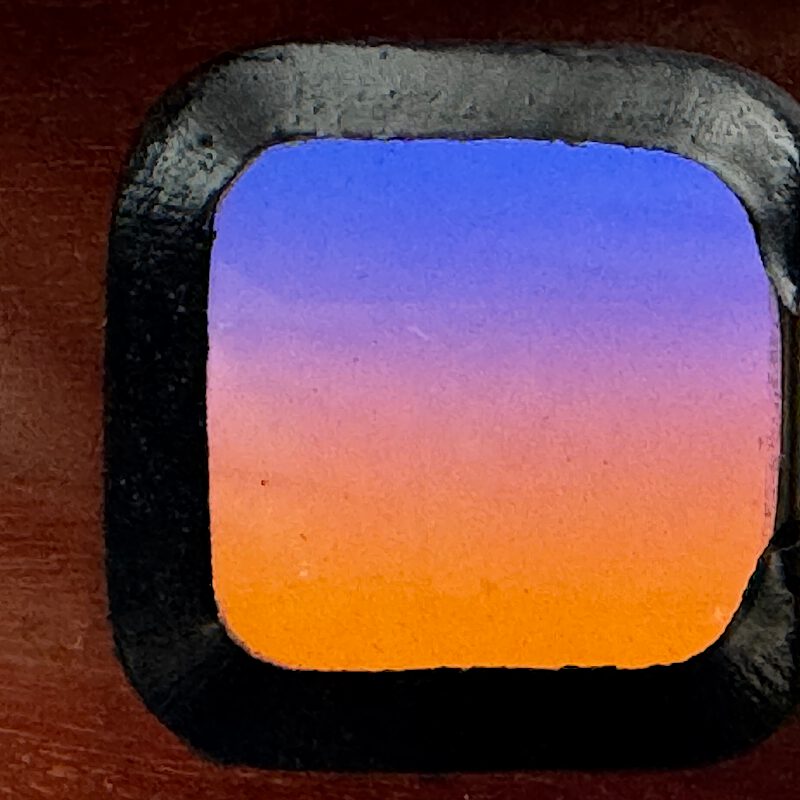
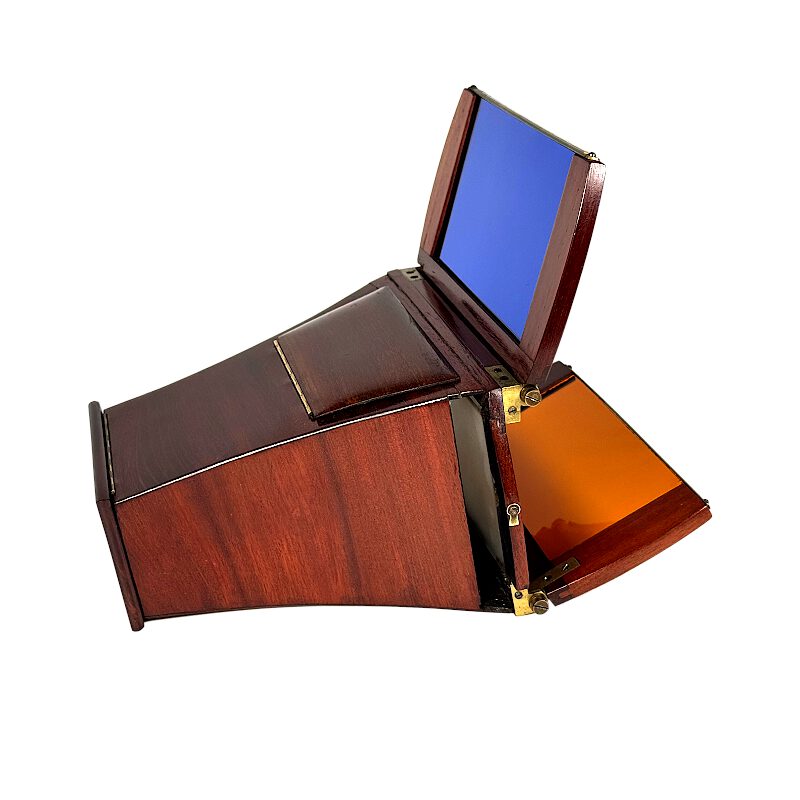
This was the case with Louis-Joseph-Auguste Gérard, who filed a patent (FR36.806 of 31 May 1858) for an improved stereoscope. Starting with a Brewster-type prism stereoscope that was entirely conventional for the period, he added coloured glass rear diaphragms, mounted on hinges and adjustable in orientation. Through their positioning and the colour of the glass, these provided all the shades and nuances of day or night. The glass panels could be changed to colour rural scenes with light blue glass at the top and green at the bottom, adding a certain charm to snowy mountain scenes with a delicate violet tint above and green below. All shades were possible depending on the positioning of the two or even three panels, and could be changed instantly according to the viewer’s mood. This stereoscope became known as the ‘Polychromatique’. Its adoption remained limited, however, perhaps because it was difficult to operate, since the apparatus had to be held while simultaneously adjusting the panels and observing the effects.
In July 1864, Jules Marinier also filed a patent (FR68.655) for a ‘Stéréoscope multicolore’ producing the same effects with very similar equipment. The only differences were, on the one hand, the interchangeability of the coloured diaphragms at the rear by means of a removable hinge and, on the other, the possibility of replacing the reflecting panel with a coloured diaphragm for viewing stereoscopic cards.
(from: Moulinier et al. Histoires de visionneuses stéréoscopiques françaises. Limoges, 2025, p. 31. Author’s translation.)